
Sheet piling · Melbourne & across Victoria
Sheet piling — press-in, vibrated and driven systems.
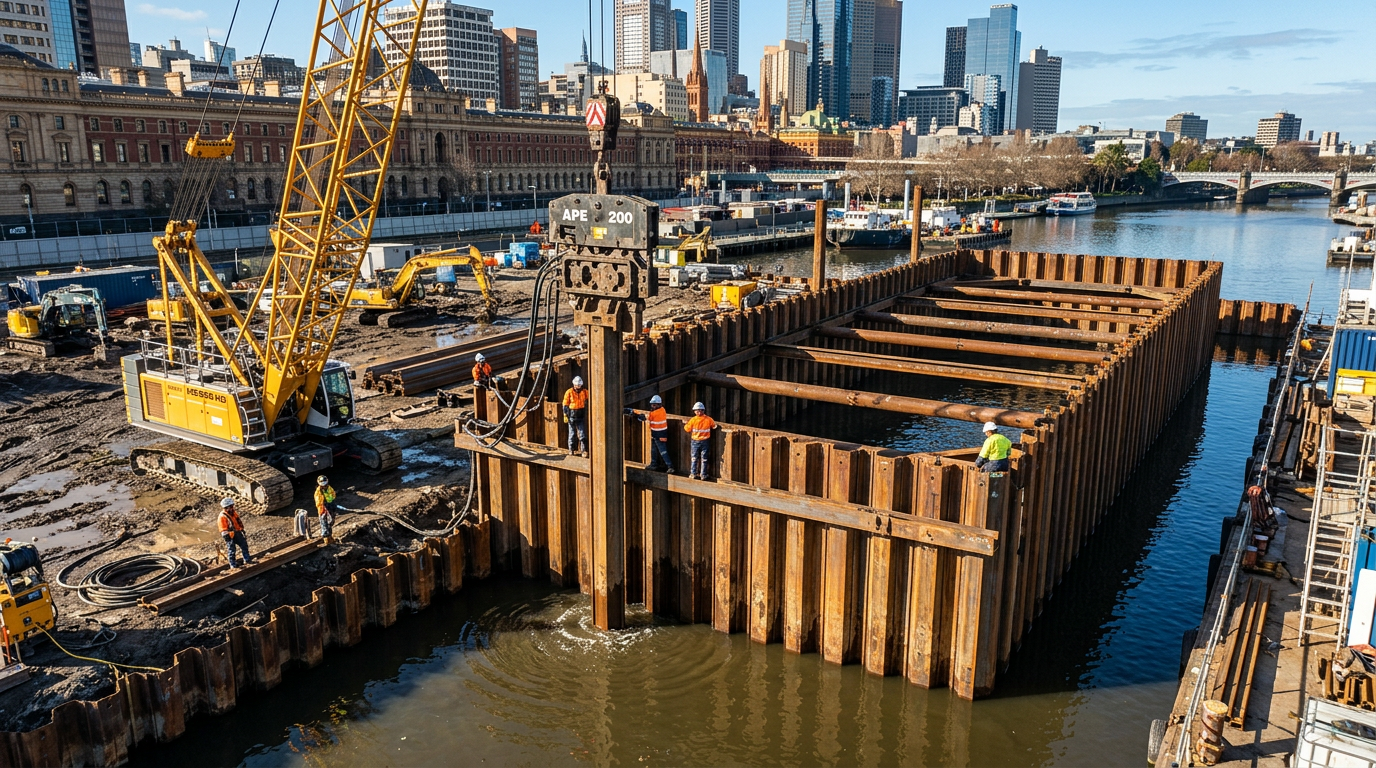
Interlocking steel sheets driven into the ground to form a continuous earth- or water-retaining wall. The backbone of cofferdams, basement shoring and infrastructure retention.
Interlocking steel sheets installed by press, vibration or impact for deep excavations, basement retention, cofferdams and waterside works across Melbourne and Victoria.
- Standard sheet length
- 12 m+
- Quietest method first
- Press / vibro
- For temporary works
- Extractable
- Drive records per sheet
- Compliant
Why teams choose this system
The short answer to "why sheet piling?"
Three install methods
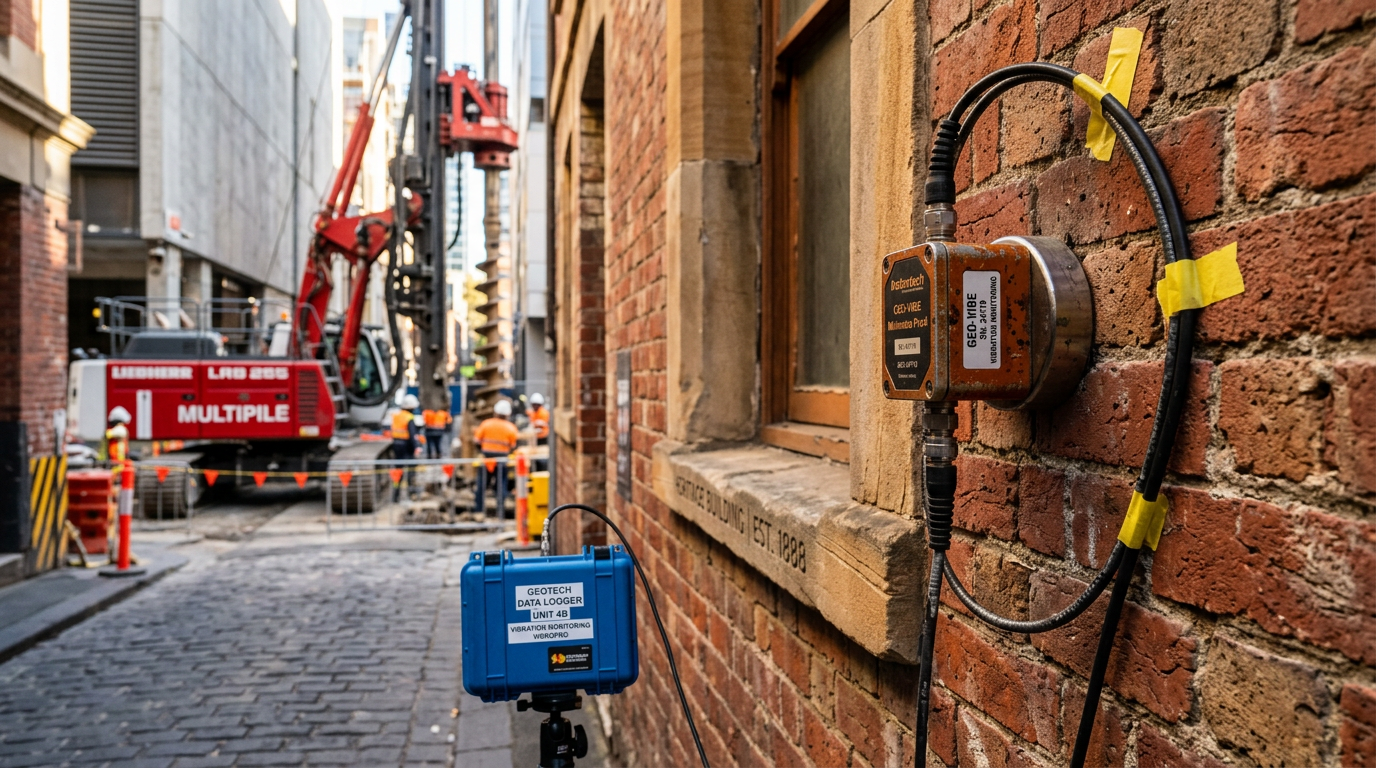
Silent hydraulic press-in for sensitive sites, vibratory hammer for open ground, impact drive where ground demands it.
Water-tight by design
Interlocking profiles create a continuous wall — standard for cofferdams and excavations below the water table.
Reusable on temp works
Temporary sheets extracted and re-used, keeping embodied carbon and cost down on short-duration projects.
Design-and-install
Section selection, penetration depth and waling design handled in-house to AS 4678 and AS 5100.
What it actually is
In plain English.
- Cold-formed or hot-rolled steel sheets with interlocking edges.
- Installed to form a continuous earth- or water-retaining wall.
- Press-in for vibration-sensitive sites, vibro or driven for open ground.
- Used permanently or extracted and re-used after temporary works.
When to use it
The right pile for the job.
- Basement excavations close to existing structures or boundaries.
- Cofferdams for bridge, marine and watercourse works.
- Tank pits and pump stations needing a dry working box.
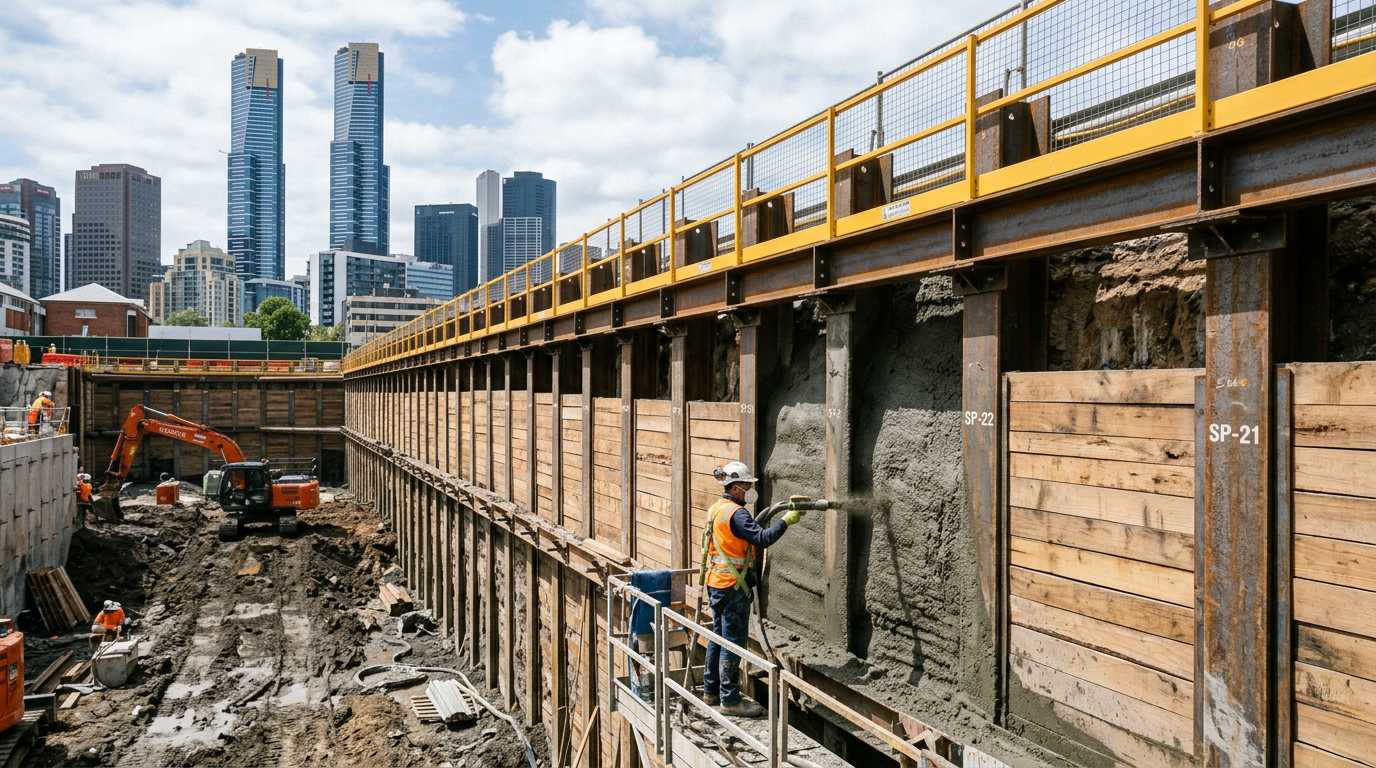
- Temporary shoring around deep utility and trench works.
Where sheet piling wins.
- Basement excavations close to existing structures or boundaries
- Cofferdams for bridge, marine and watercourse works
- Tank pits and pump stations needing a dry working box
- Temporary shoring around deep utility and trench works
We'll tell you if a different system fits better.
- Sites with dense gravel or cobbles the sheets cannot penetrate
- Projects where soldier-pile infill walls are more economical (see Retention Systems)
Our process
From scope to engineer-signed cert pack.
Penetration depth, section selection and waling design to suit ground, surcharge and adjacent structures.
Silent press-in for sensitive sites, vibratory hammer for open ground, impact where ground demands it.
Sheets installed to design penetration. Verticality, interlock and depth recorded per sheet.
Temporary sheets extracted and recycled. Permanent walls capped and finished to specification.
How fast we can mobilise.
2 – 6 weeks depending on section length and hammer type — press-in rigs have the shortest mobilisation.
How we price it.
Priced per square metre of wall and per sheet extracted, with hire/procurement separated. Walings and capping beams quoted as line items.
Related projects
Recent work using this method.
Technical reading
Engineer-level detail on this system.
Peer-reviewed articles from our engineering team — diagrams, worked examples and standards references.
FAQ
Questions on sheet piling.
Will sheet piling shake the neighbours?
Not with a press-in rig. We use silent hydraulic press-in for sensitive sites — vibration is effectively zero and noise is minimal.
Is sheet piling permanent or temporary?
Either. We extract and re-use temporary sheets after the main works. Permanent sheets are left in and finished — capping beams, claddings or shotcrete as designed.
What section profiles do you use?
Z-profile (AZ/AU series) for high section modulus, U-profile for general shoring, and combination/box piles for deep retention. We'll pick the section that meets the required moment capacity at the minimum steel tonnage.