Screw piling · Melbourne & across Victoria
Screw piling — fast, clean, torque-verified foundations.
Steel shafts with helical plates rotated into the ground by a torque rig. Verified on installation, ready to load the same day — no concrete, no curing, no spoil. The right answer when speed, cleanliness or tight access matter.
Heavy helical and blade-type screw piles installed by torque rig. Torque-verified on installation, ready to load the same day. Suited to civil, energy, solar, commercial and major residential foundations.
- Helix diameter
- Up to 1,050 mm
- Depth capability
- Up to 45 m
- Per pile, per location
- Torque verified
- Ready to load
- Same day
Why teams choose this system
The short answer to "why screw piling?"
Loadable the same day
Each pile is verified on installation by torque — the moment it hits the acceptance figure, it's ready to carry load. Slab can follow immediately.
Clean site, no spoil
No drilled spoil to cart away, no concrete trucks, no curing compound. Ideal for contaminated ground, wet sites and tight programs.
Huge access flexibility
From compact indoor rigs for underpinning in a basement to a 150-tonne torque rig for 45 m deep structural piles — we pick the machine to fit the site.
Works in the water table
One of the few systems that installs cleanly in saturated sand and below the water table — no slumping bore, no compromised concrete.
What it actually is
In plain English.
- A steel shaft with one or more helical plates welded near the tip.
- Rotated into the ground by a hydraulic torque motor on a heavy or compact rig.
- Installation torque correlates to geotechnical capacity and is recorded for every pile.
- Supplied bare-steel, hot-dip galvanised or fusion-bonded epoxy depending on the corrosion class.
When to use it
The right pile for the job.
- Energy and infrastructure foundations where mobilisation needs to be fast and clean.
- Pipeline support, modular plant and platform foundations on remote sites.
- Commercial and major residential slabs on reactive clay and reclaimed ground.
- Coastal and groundwater sites where concrete cure would compromise a poured pier.
- Tight-access urban infill where a compact rig is the only option.
Where screw piling wins.
- Utility-scale solar farms and battery energy storage
- Process plant, tank-farm and pipeline foundations
- Residential and commercial slabs on reactive clay or reclaimed ground
- Tight-access underpinning and retrofit works
- Coastal, groundwater and contaminated sites
We'll tell you if a different system fits better.
- Very high-load bridge piers and bored-socket-only specifications (use bored piles)
- Sites with dense gravel, cobbles or boulders that the helix can't thread through
- Projects where the structural engineer has specified cast-in-place reinforced concrete
Our process
From scope to engineer-signed cert pack.
Soil report and loads in our hands. Pile schedule, helix configuration and torque acceptance criteria designed to AS 2159.
Heavy torque rig for large diameters and deep installs, compact rig for tight access. Helix and shaft fabricated to design.
Each pile rotated to design torque. Torque-vs-depth recorded per pile, per location.
Signed install records and engineer certification issued same day. Slab or platform built on the piles immediately.
Capability
Quick-reference specs.
| Shaft diameter | 76 mm – 350 mm (typical) |
|---|---|
| Helix diameter | Up to 1,050 mm |
| Typical depth | 3 – 12 m, up to 45 m where required |
| Verification | Torque-monitored on every pile per AS 2159 clause 8 |
| Corrosion protection | Hot-dip galvanised, coated or bare steel |
| Load types | Compression, tension, lateral and combined |
| Install rate | Up to 300+ piles per day on solar campaigns |
| Standards | AS 2159, AS/NZS 2312, AS/NZS 4680 |
How fast we can mobilise.
Typically 1 – 3 weeks from order to install. Solar and screw-pile campaigns can run 300+ piles per day.
How we price it.
Priced per pile at design torque and depth, with mobilisation and engineering packaged in. We'll price-back a full solar field within 48 hours of a layout and loadings.
Related projects
Recent work using this method.
Coastal residence, screw piles on saturated sand
Regional medical precinct, screw pile foundations
Modular process platform, screw pile foundations
Technical reading
Engineer-level detail on this system.
Peer-reviewed articles from our engineering team — diagrams, worked examples and standards references.
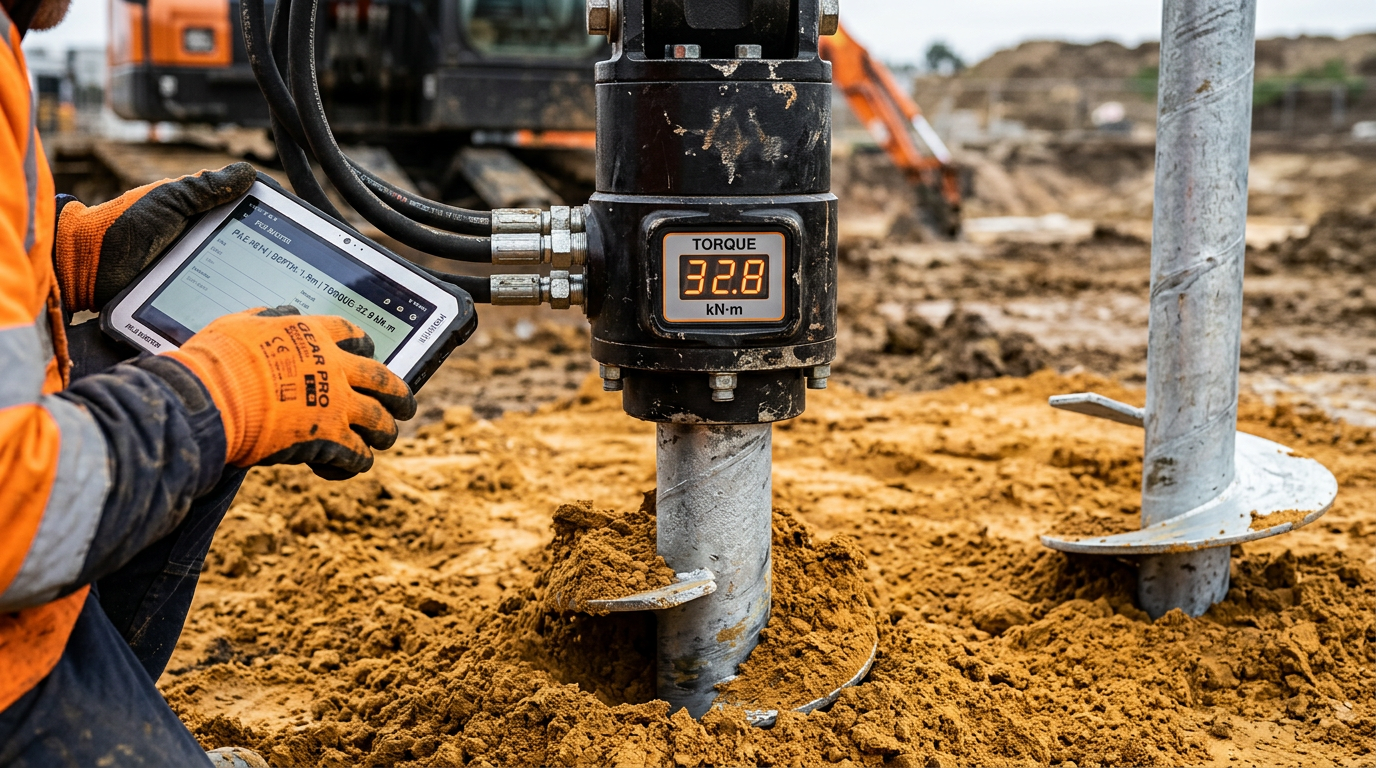
Helical pile torque-to-capacity: AS 2159 Section 8 verification explained
Read article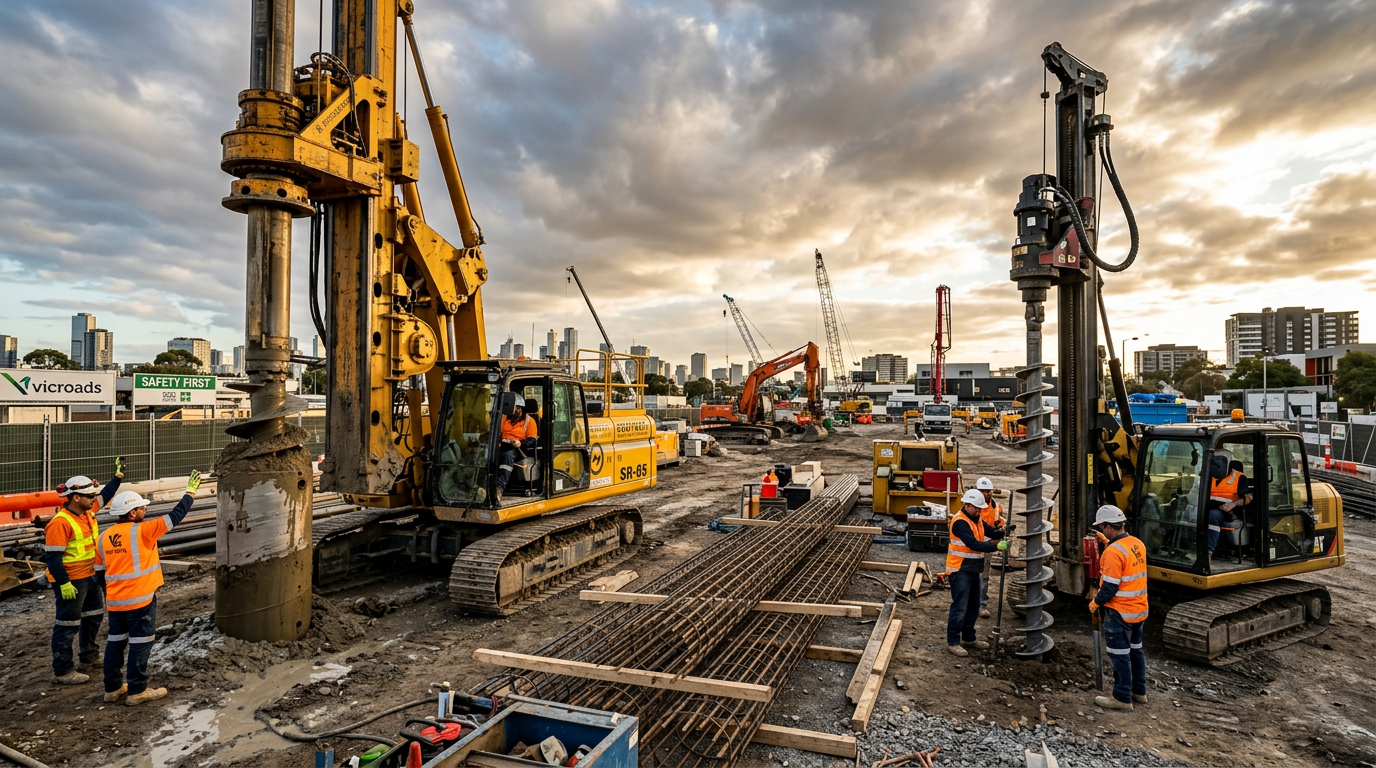
Bored piers or steel screw piles? A selection guide for civil engineers
Read article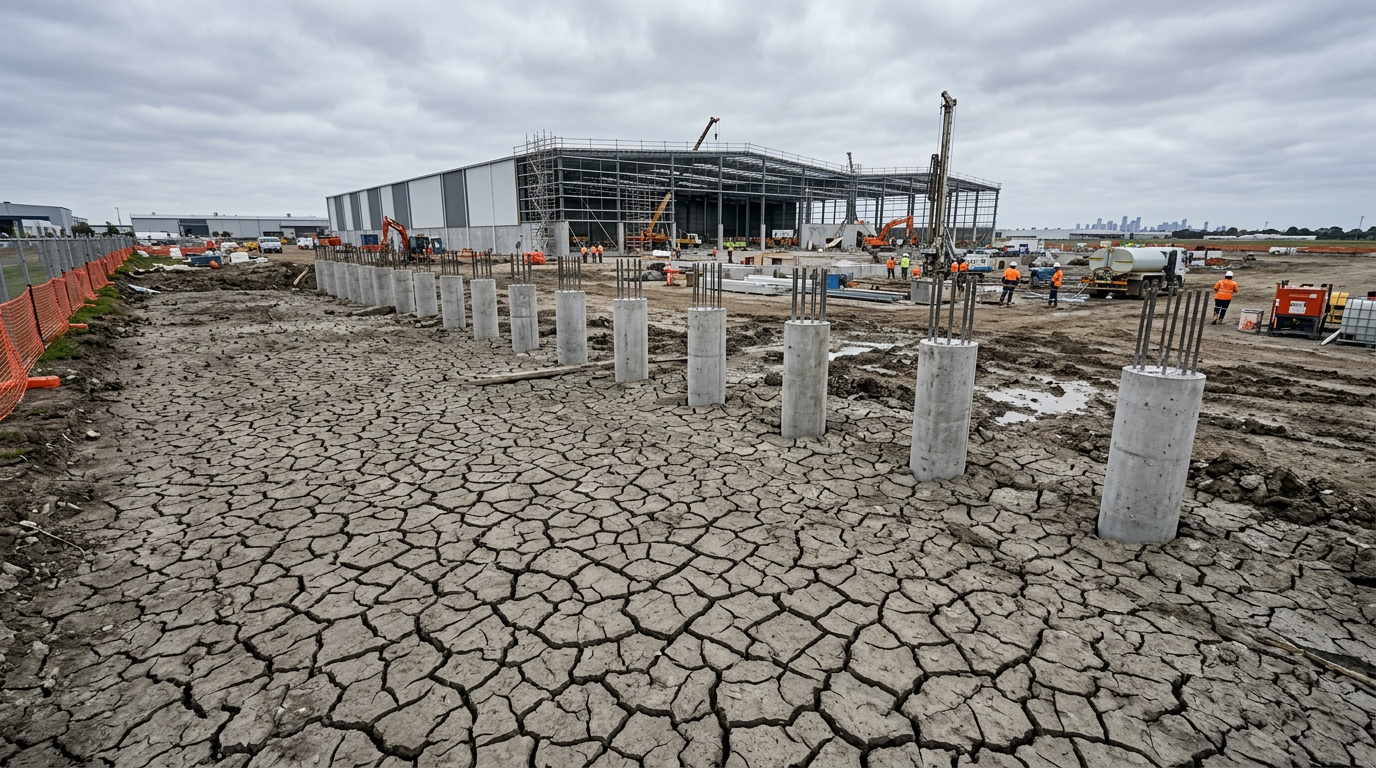
Piling in Melbourne's reactive basaltic clay — what the west demands
Read article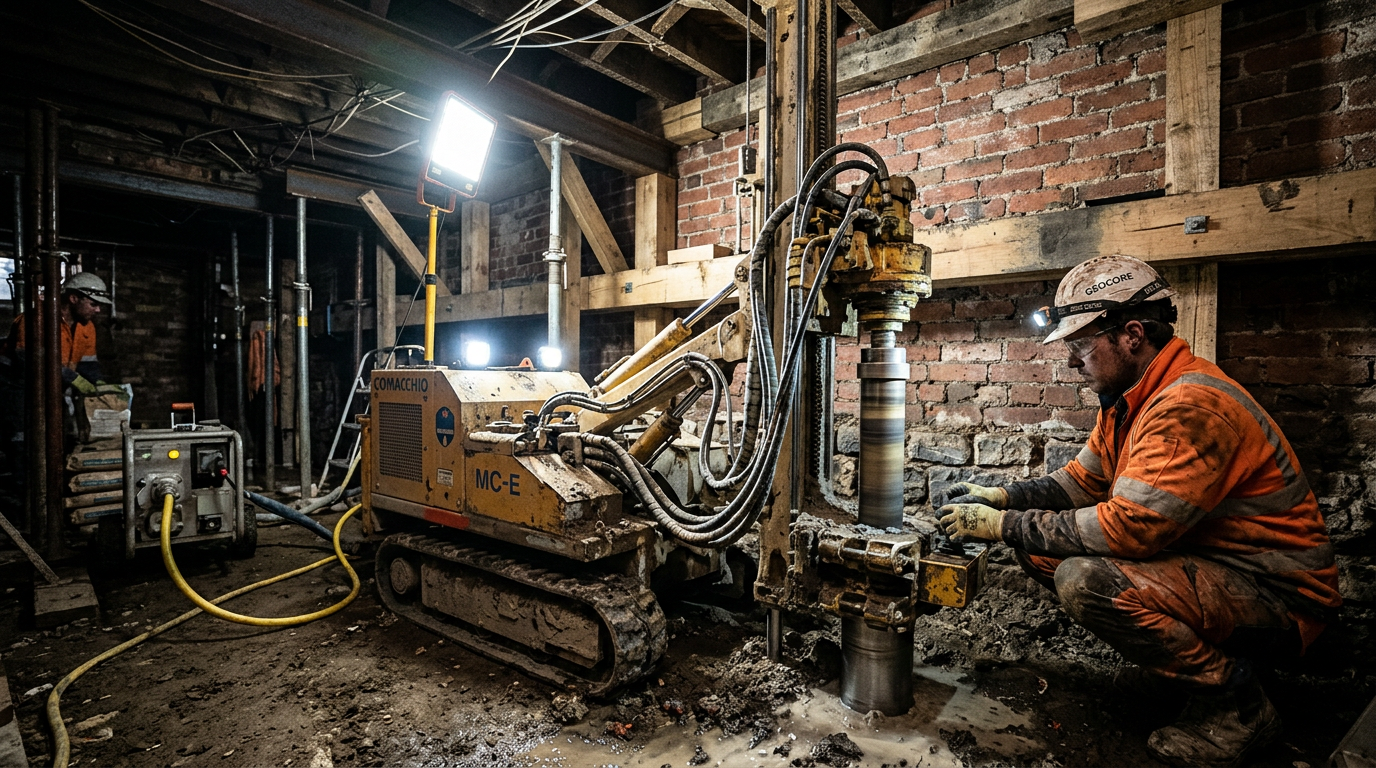
Micropiles for underpinning — a Melbourne practitioner's guide
Read articleFAQ
Questions on screw piling.
What's the largest screw pile you can install?
Helix diameters up to 1,050 mm and depths to 45 m on the right rig. Most volume installs run 200 – 600 mm helix at 3 – 8 m depth.
Do screw piles need curing time?
No. Once a pile reaches its design torque it is verified and ready to carry load. You can build on them the same day.
Can you install in saturated ground or coastal sand?
Yes — screw piling is one of the few systems that works cleanly in groundwater and coastal sand. No spoil, no slumping bore, no compromised concrete.
How is capacity actually verified?
By installation torque. Every pile is rotated to a torque value derived from engineer-calculated acceptance criteria, and the torque-vs-depth profile is logged for every location.
How accurate is torque correlation?
With the right calibration factor (Kt) and helix-to-shaft ratio, installation torque reliably predicts ultimate capacity to within about 20%. For critical loads we verify with a static or dynamic load test.
Can I pull a screw pile out if the project moves?
Yes. Unlike bored piers, screw piles can be rotated back out of the ground and re-used on another site — a legitimate sustainability advantage for temporary works.