Sleeve piling · Melbourne & across Victoria
Sleeve piling — cased piles for ground that won't stay open.
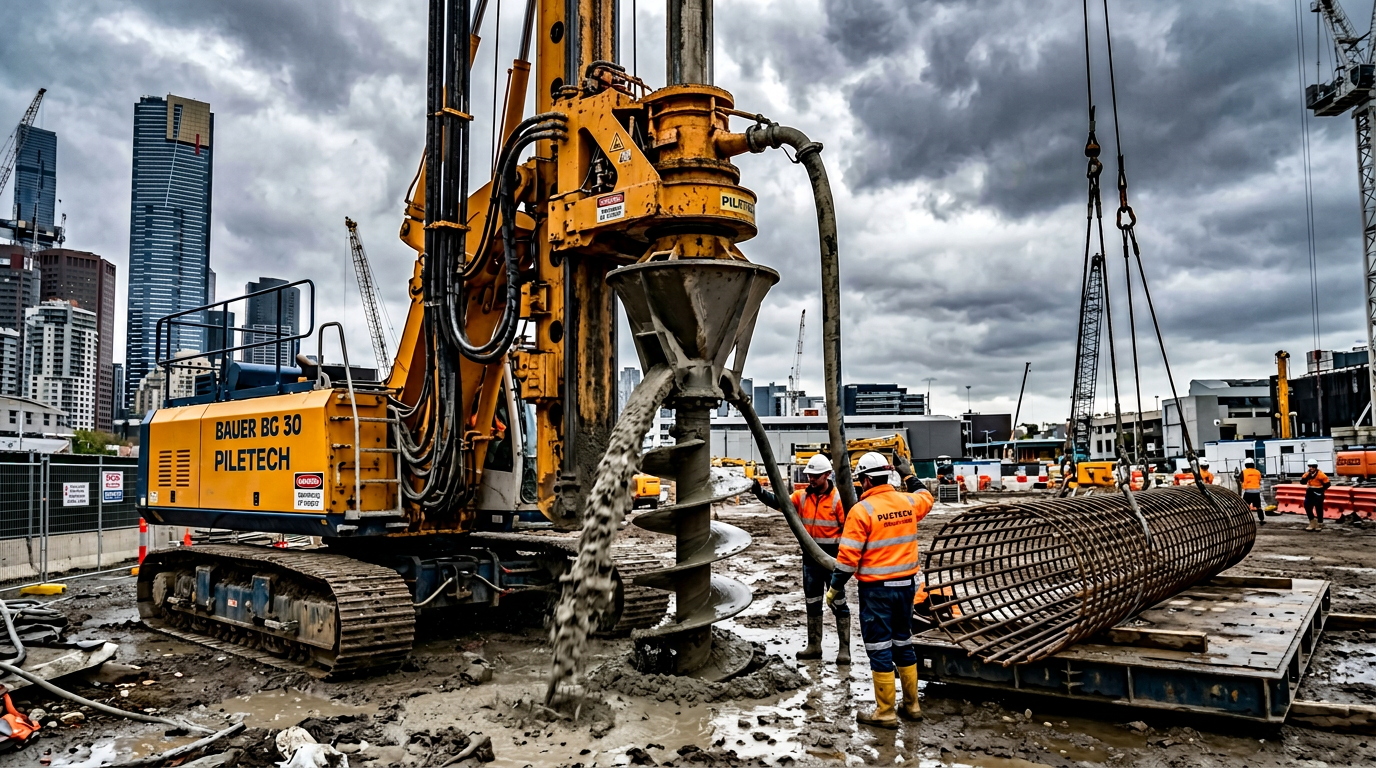
A bored pile installed inside a steel casing. The sleeve protects the concrete from collapsing, saturated or contaminated ground so the pile can be formed to full design depth — the engineering answer when an open bore simply won't work.
Permanent or temporary steel casing installed through soft, saturated or collapsing layers so the pile can be formed to full design depth. Standard practice for energy, pipeline and major civil projects.
- Or temporary casing
- Permanent
- Through any profile
- Soft to rock
- Per ground condition
- Engineered
Why teams choose this system
The short answer to "why sleeve piling?"
Works in ground that collapses
Saturated sand, soft silt, made ground — where an open bore would cave in before concrete arrives.
Protects concrete integrity
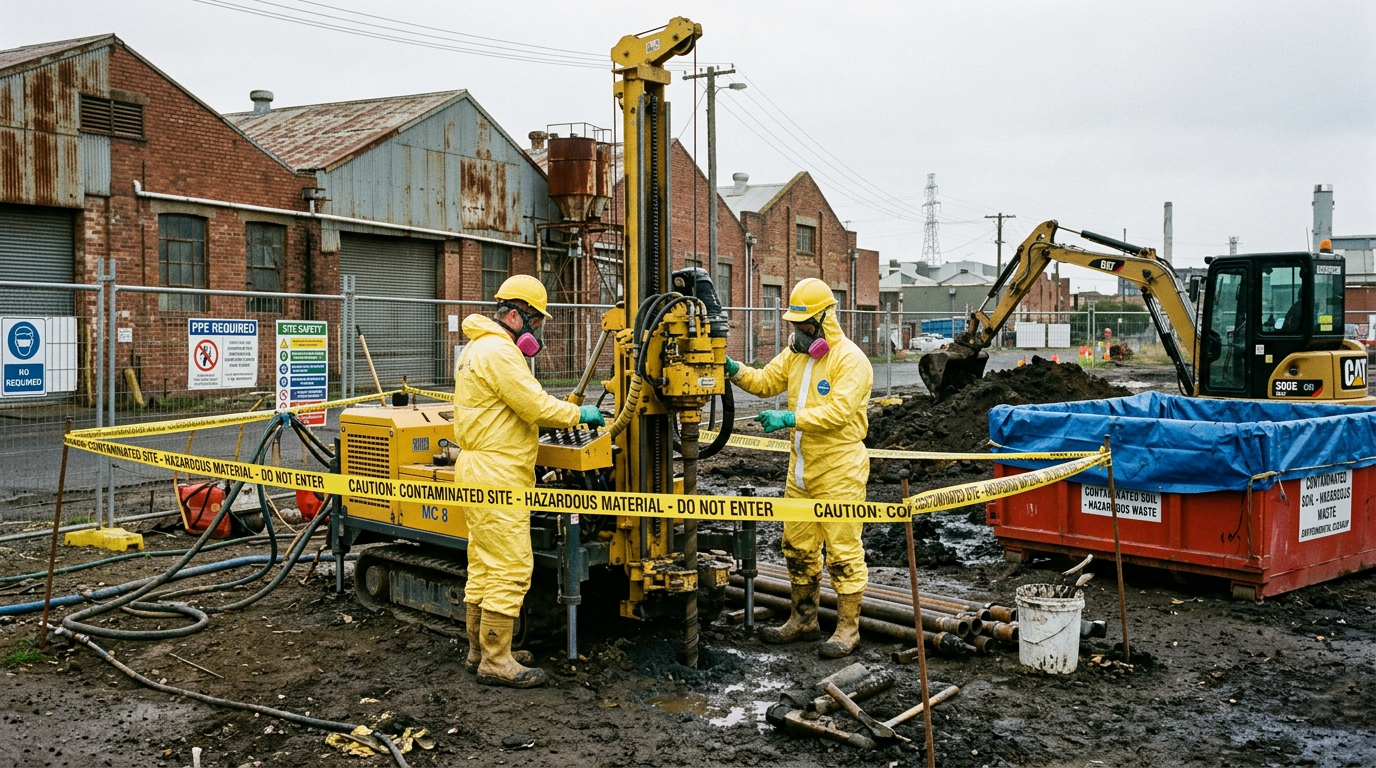
Casing isolates the pour from groundwater, contaminated ground and aggressive soils, preserving long-term durability.
Permanent or temporary
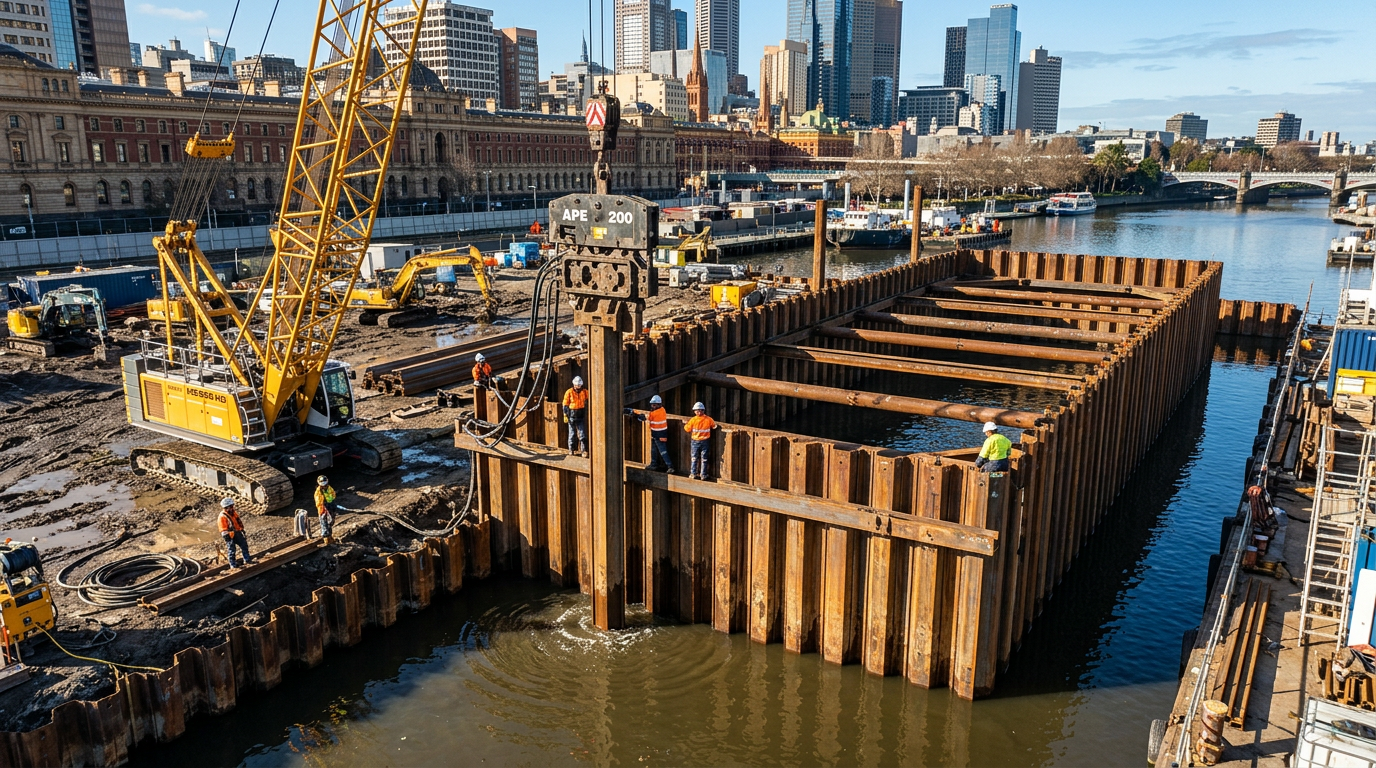
Sleeve is left in for long-term integrity on pipeline and energy projects, or extracted progressively during the pour.
Engineered, certified
Cased-pile method statement, extraction log and chartered-engineer certification on every job.
What it actually is
In plain English.
- A bored pile installed inside a steel sleeve (casing).
- The sleeve isolates concrete from soft, saturated or contaminated ground.
- Casing can be left permanently in place or extracted as the concrete is poured.
- Suited to pipeline crossings, plant footings and basement piling in difficult ground.
When to use it
The right pile for the job.
- Saturated sands and silts that collapse into an open bore.
- Soft clay lenses that squeeze a bored pile out of shape.
- Pipeline and utility crossings with strict ground integrity requirements.
- Sites where ground water would compromise an uncased concrete pier.
Where sleeve piling wins.
- Pipeline and utility crossings through saturated ground
- Process plant and tank foundations in reclaimed land
- Basement piling in saturated sand or made ground
- Sites where groundwater would compromise an uncased concrete pier
We'll tell you if a different system fits better.
- Dry, self-supporting ground where a standard bored pier is more economical
- Very high production rates where CFA or screw piles may outpace the method
Our process
From scope to engineer-signed cert pack.
Steel sleeve installed through the problem layer using rotation, vibration or driving.
Pile bore advanced inside the casing to design depth using auger or rock tooling.
Cage placed, concrete poured by tremie. Casing extracted progressively or left in per design.
Casing extraction record, pour record and engineer's certification issued for handover.
How fast we can mobilise.
Typically 3 – 5 weeks — casing procurement drives program.
How we price it.
Priced per pile including casing procurement, installation, extraction and certification. Custom quote required.
Related projects
Recent work using this method.
Technical reading
Engineer-level detail on this system.
Peer-reviewed articles from our engineering team — diagrams, worked examples and standards references.
FAQ
Questions on sleeve piling.
Is the sleeve left in the ground?
It depends on the design. Permanent casing is specified where long-term integrity of the pile would be at risk without it — pipeline crossings and contaminated ground are common cases.
What ground conditions usually need sleeve piling?
Saturated sands, soft clays, made ground over fill, and any layer that collapses into an open bore before reinforcement and concrete arrive.
How do you verify extraction during the pour?
We log casing-head elevation against concrete level on every metre of extraction, so the concrete head is always above the casing toe — method is aligned with the ICE SPERW and AS 2159 guidance.