Foundations for the country's most demanding builds.
Bored piers from 300 mm to 2,100 mm diameter and 40 m deep. Steel screw piles to 1,050 mm and 45 m. Drilled through reactive clay, basalt and granite. Engineer-signed and certified, every job.
- Diameter
- 300 – 2,100 mm
- Depth
- Up to 40 m
- Diameter
- Up to 1,050 mm
- Depth
- Up to 45 m
Trusted on tier-1 civil, energy and infrastructure projects









Capability
Six piling disciplines. One crew. Engineered end to end.
From a 2.1 m bored pier rock-socketed into basalt for a freeway bridge pier, to a 45 m screw pile under a process platform — VIC PILING delivers the right system, the right rig and the right paperwork.
Bored Piling
Bored concrete piers from 300 mm to 2,100 mm diameter, drilled to 40 m through clay, sand, basalt and granite.
- Dia
- 300 – 2,100 mm
- Depth
- 40 m
Screw Piling
Heavy-duty steel screw piles up to 1,050 mm diameter and 45 m deep — rapid install, torque-verified, no spoil.
- Dia
- Up to 1,050 mm
- Depth
- 45 m
Sleeve Piling
Permanent or temporary cased piles for collapsing ground, saturated layers and pipeline crossings.
- Casing
- Perm. / Temp.
- Use
- Pipelines · Water
Sheet Piling
Press-in, vibrated and driven sheet piling for shoring, cofferdams and waterside works.
- Method
- Press · Drive · Vibro
- Use
- Shoring · Marine
Retention Systems
Soldier piles, contiguous walls and capping beams engineered for major cut-and-fill and basement retention.
- System
- Soldier · Contig. · Sec.
- Height
- Engineered
Engineering & Compliance
In-house design, AS 2159 documentation and chartered-engineer certification end to end.
- Standard
- AS 2159
- Output
- Cert pack
Why principals keep coming back
Heavy capability. Tight programs. Clean handover.
We're not a sub-and-sub-again contractor. We own the rigs, employ the crew, and our engineers sit two metres from estimating. That's why a tier-1 builder calls us when the slab date can't slip.
Owned fleet, operator-led
Heavy and compact rigs, rock augers, casing equipment and sheet piling presses — all in-house. No waiting on hire.
Engineering under the same roof
Pile design, AS 2159 compliance and certification handled by chartered engineers who walk the rigs.
Tier-1 documentation
Pour records, torque logs, cage drop sheets and post-install certs — packaged the way principal contractors actually want them.
Built for Victorian ground
Reactive clay in the south-east, basalt in the west, sandstone in the north. We've drilled it all and we don't guess.
Selected projects
Real piles. Real ground. Real numbers.
Basement retention, Melbourne CBD development
New government school — STEM building foundations
Hyperscale data-centre foundations — western Melbourne
Process platform foundations, Longford gas plant
Pipeline crossing, sleeve piling — Northern Victoria
M80 Western Ring Road — noise-wall foundations
Site office, said straight
What the supervisors who actually run our jobs say.
Unedited feedback from tier-1 civil principals, EPCs, rail and energy clients. Hover to pause.
VIC PILING were on a tight rock-socketed bored pier program for us. Geotech threw a couple of curveballs and they re-cut the schedule on the same shift. Cert pack landed before we'd packed up.
We've used George's crew on multiple pipeline crossings — sleeve piling through saturated clay, no fuss. They know what we need before we ask, and the documentation is bullet-proof.
Bored 1.8 m diameter piers to 32 metres through basalt for our bridge approach. Rigs, crew and engineers all from the one outfit. Made my program twenty per cent shorter.
Piling program stayed inside two days on a live freeway. Cert pack landed the morning after the final pile. That's what you want on a Tulla job.
Six thousand screw piles for a solar farm in under eight weeks, through basalt floaters, no re-work. Torque logs clean, engineer certs issued weekly. We'll have them back for the next site.
Their engineering peer-review picked up a load-factor error on our design in 48 hours. Saved the program three weeks and a lot of argument. Straight shooters, technically sharp.
Tight-access underpinning job next to a heritage façade. Micro-pile rig in, vibration logged per pile, not a crack on the wall. Quiet, clean, in and out in a week.
184 large-diameter bored piers on a data-centre slab. CSL tested every pile, not one defective pour across the program. Mobilised early when our ground-improvement sub ran late.
Priced tight, ran tighter. No variations, no drama, and a cert pack the superintendent signed off in one pass. That's not common in this trade.
We briefed them Thursday on a school STEM slab over reactive clay. Design back Monday, rig on site the following week. Screw piles torque-verified, slab poured on program.
Retention wall, 14 m deep, contiguous bored piers next to an active rail corridor. Movement monitoring stayed inside trigger across the whole dig. Engineering paperwork matched the performance.
Called them Friday afternoon for an emergency shoring job — press-in sheet piles on a slumped excavation. Crew on site Saturday morning, wall closed by Sunday night. Saved the program.
VIC PILING were on a tight rock-socketed bored pier program for us. Geotech threw a couple of curveballs and they re-cut the schedule on the same shift. Cert pack landed before we'd packed up.
We've used George's crew on multiple pipeline crossings — sleeve piling through saturated clay, no fuss. They know what we need before we ask, and the documentation is bullet-proof.
Bored 1.8 m diameter piers to 32 metres through basalt for our bridge approach. Rigs, crew and engineers all from the one outfit. Made my program twenty per cent shorter.
Piling program stayed inside two days on a live freeway. Cert pack landed the morning after the final pile. That's what you want on a Tulla job.
Six thousand screw piles for a solar farm in under eight weeks, through basalt floaters, no re-work. Torque logs clean, engineer certs issued weekly. We'll have them back for the next site.
Their engineering peer-review picked up a load-factor error on our design in 48 hours. Saved the program three weeks and a lot of argument. Straight shooters, technically sharp.
Tight-access underpinning job next to a heritage façade. Micro-pile rig in, vibration logged per pile, not a crack on the wall. Quiet, clean, in and out in a week.
184 large-diameter bored piers on a data-centre slab. CSL tested every pile, not one defective pour across the program. Mobilised early when our ground-improvement sub ran late.
Priced tight, ran tighter. No variations, no drama, and a cert pack the superintendent signed off in one pass. That's not common in this trade.
We briefed them Thursday on a school STEM slab over reactive clay. Design back Monday, rig on site the following week. Screw piles torque-verified, slab poured on program.
Retention wall, 14 m deep, contiguous bored piers next to an active rail corridor. Movement monitoring stayed inside trigger across the whole dig. Engineering paperwork matched the performance.
Called them Friday afternoon for an emergency shoring job — press-in sheet piles on a slumped excavation. Crew on site Saturday morning, wall closed by Sunday night. Saved the program.
Service area
If it's in Victoria, we'll pile it.
We don't have a short list of "service areas" — we pile anywhere in the state. Heavy rigs from Keysborough roll out across metro Melbourne, the growth corridors, the regional cities and the remote energy and pipeline country in the east. And where a specialist project interstate calls for our tooling, we mobilise for that too.
- Metro MelbourneEvery corridor — CBD, west, north, south-east and bayside.
- Outer growth corridorsTruganina, Tarneit, Werribee, Pakenham, Mickleham, Clyde North.
- Regional citiesGeelong, Ballarat, Bendigo, Shepparton, Warrnambool.
- Coastal & peninsulasMornington, Bellarine, Surf Coast and the Great Ocean Road.
- Energy & industrial corridorsGippsland, Latrobe Valley, Longford, pipeline easements.
- Anywhere else in VictoriaIf the brief is sound and the ground is drillable, we mobilise.
- Interstate — specialist projectsCivil, energy and renewables projects across Australia, where our tooling fits the brief.
Indicative service coverage. Mobilisation charges may apply for remote regional and energy sites.
Insights & technical articles
Written by engineers. Read by engineers.
Peer-reviewed guides to AS 2159, rock socketing in Victorian basalt, reactive clay, load testing and the ground conditions you will actually meet on site. Hover to pause.
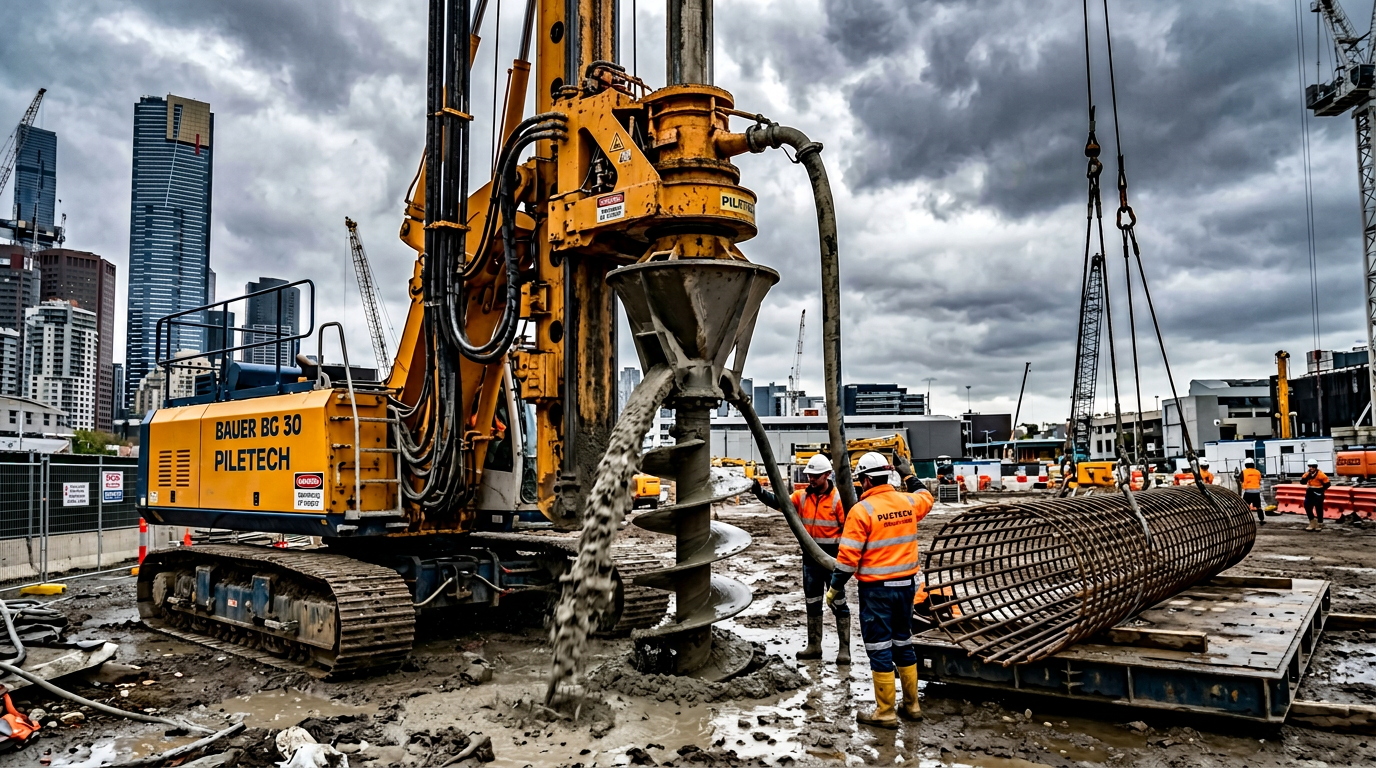
CFA piling — method, quality assurance and when to specify it
A practitioner's guide to Continuous Flight Auger (CFA) piling: how the method works, where it beats bored piers, the quality-control instrumentation every spec should demand, and the ground conditions where CFA should be avoided. Written for designers specifying foundations in Victoria.
Read article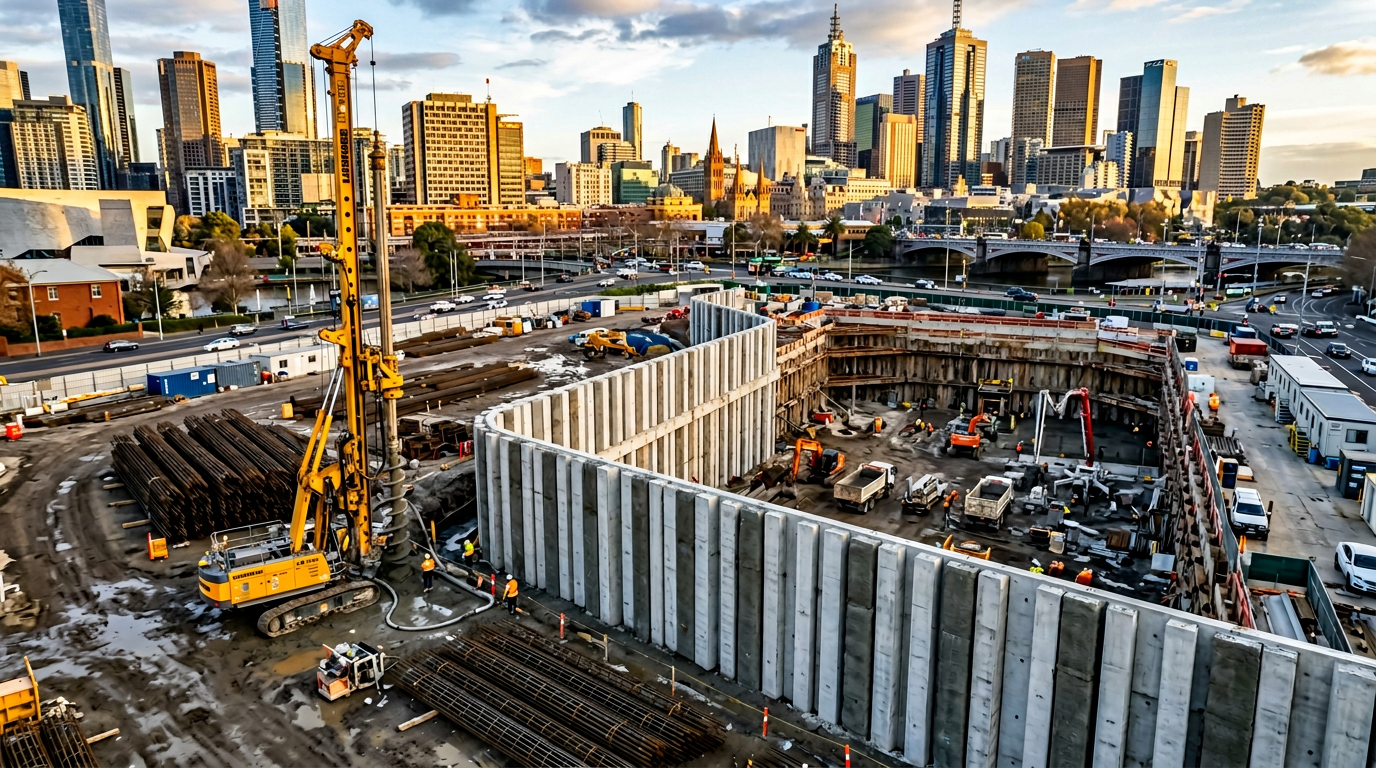
Secant, contiguous or tangent pile walls — a basement-retention decision tree
Three pile-wall systems look similar on a plan but behave very differently on a wet Melbourne basement. This guide walks through the design drivers — water tightness, stiffness, vibration, cost and program — that decide between secant, contiguous and tangent pile walls.
Read article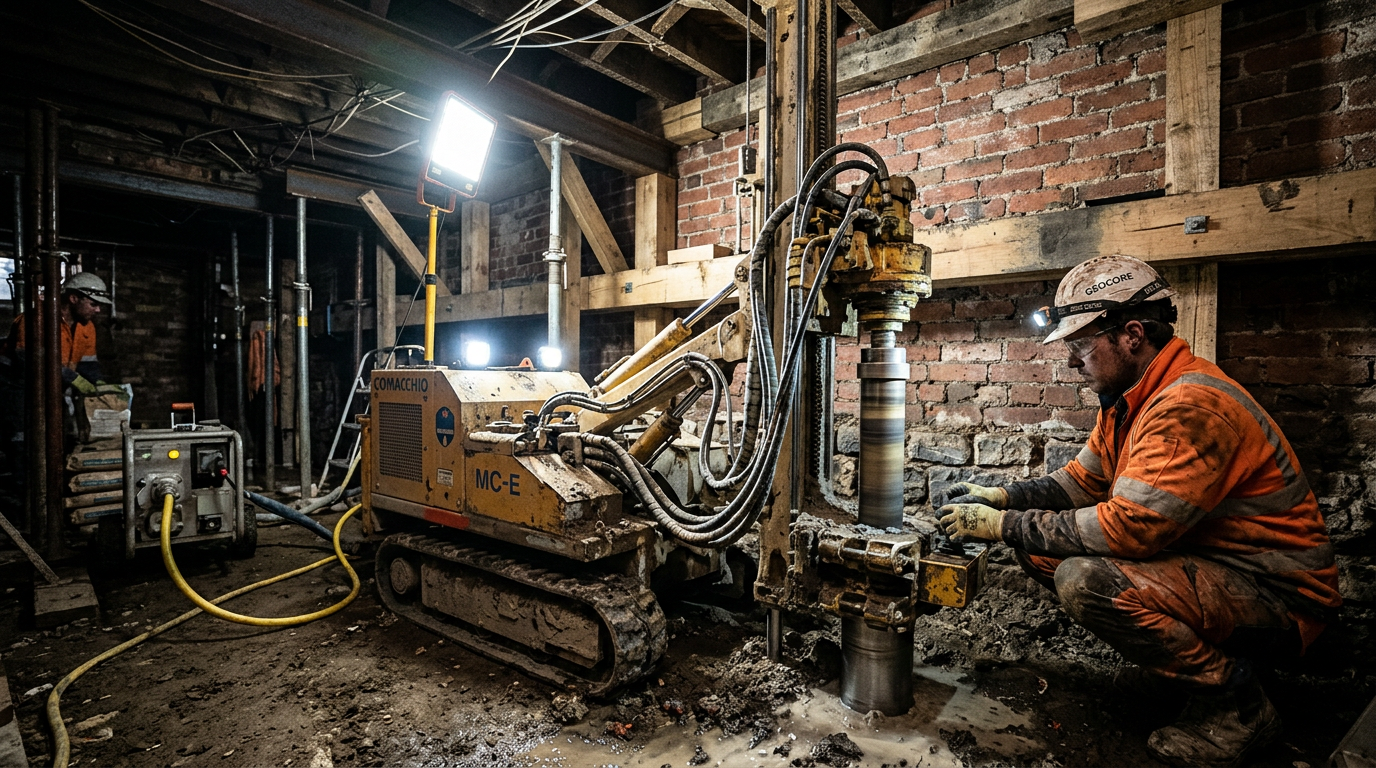
Micropiles for underpinning — a Melbourne practitioner's guide
When a heritage terrace needs to go up another storey, or a Melbourne slab has lost its founding, micropiles are often the only option that fits. A practical guide to sizing, installing and load-testing micropiles for underpinning on Victorian sites.
Read article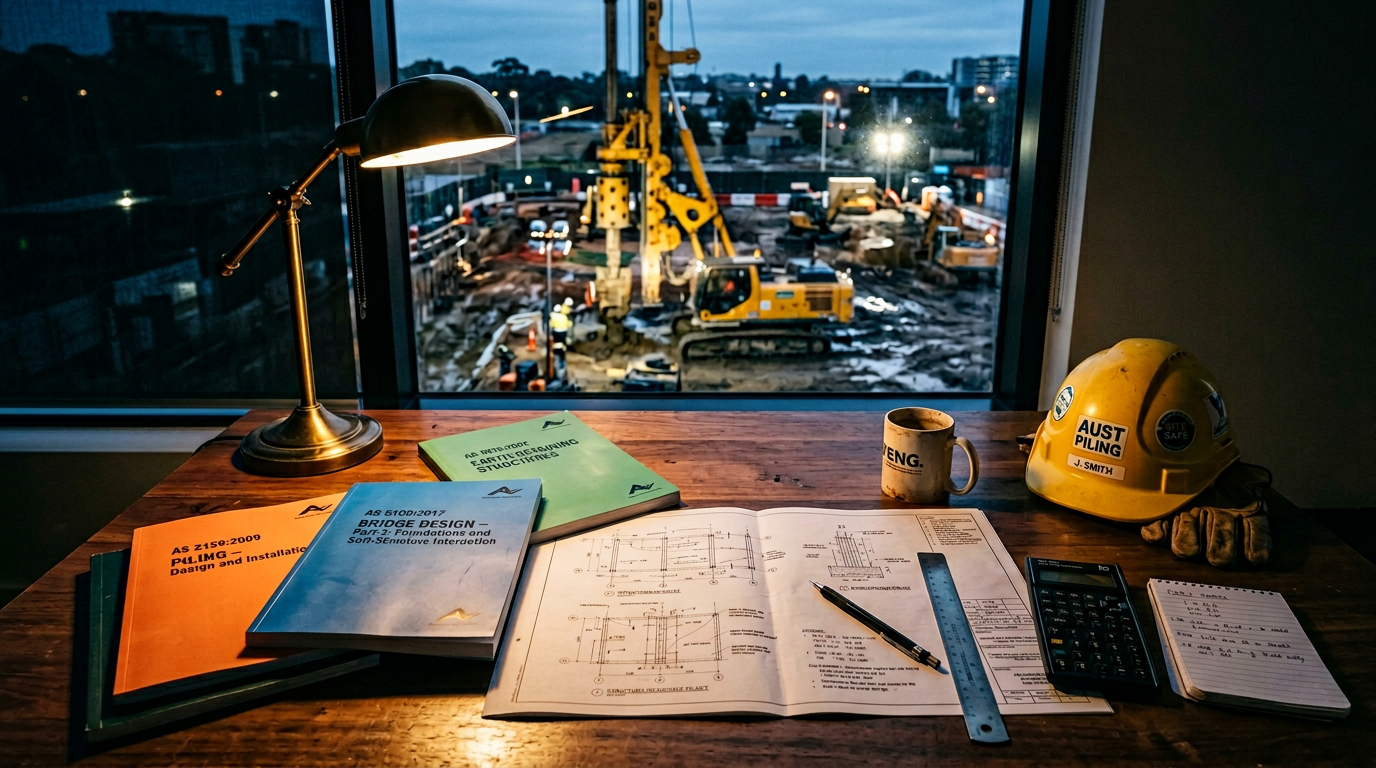
The Australian piling standards explained: AS 2159, AS 5100 and AS 4678
A principal engineer's tour through the three Australian Standards that govern piling in Victoria — what each one covers, how they interact, and the pitfalls that fail an audit.
Read article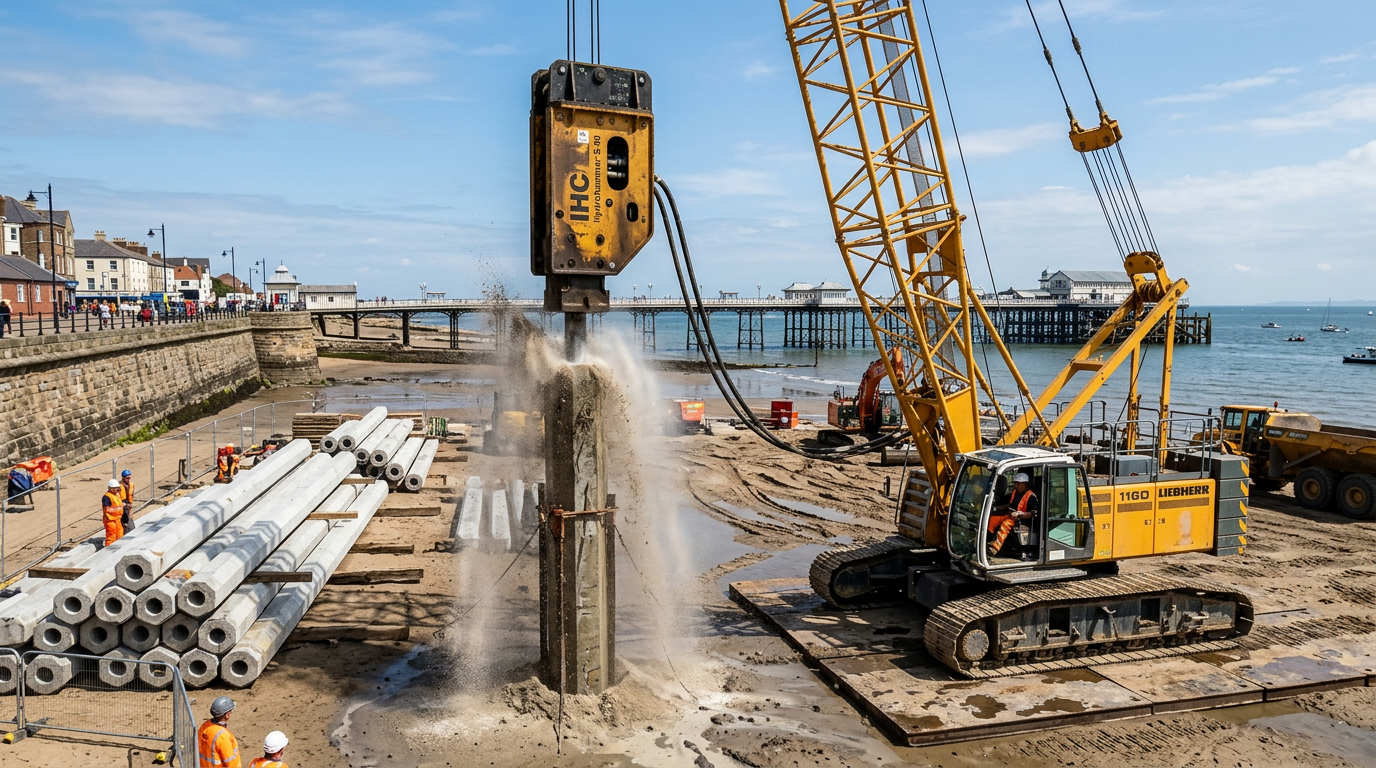
Driven precast concrete piles — where they still beat bored and screw
Replacement piling has dominated urban Australia for 20 years, but displacement driven precast piles still win on a surprising number of projects — marine, coastal, deep granular ground, and anywhere high production rates and low cost-per-metre matter more than vibration.
Read article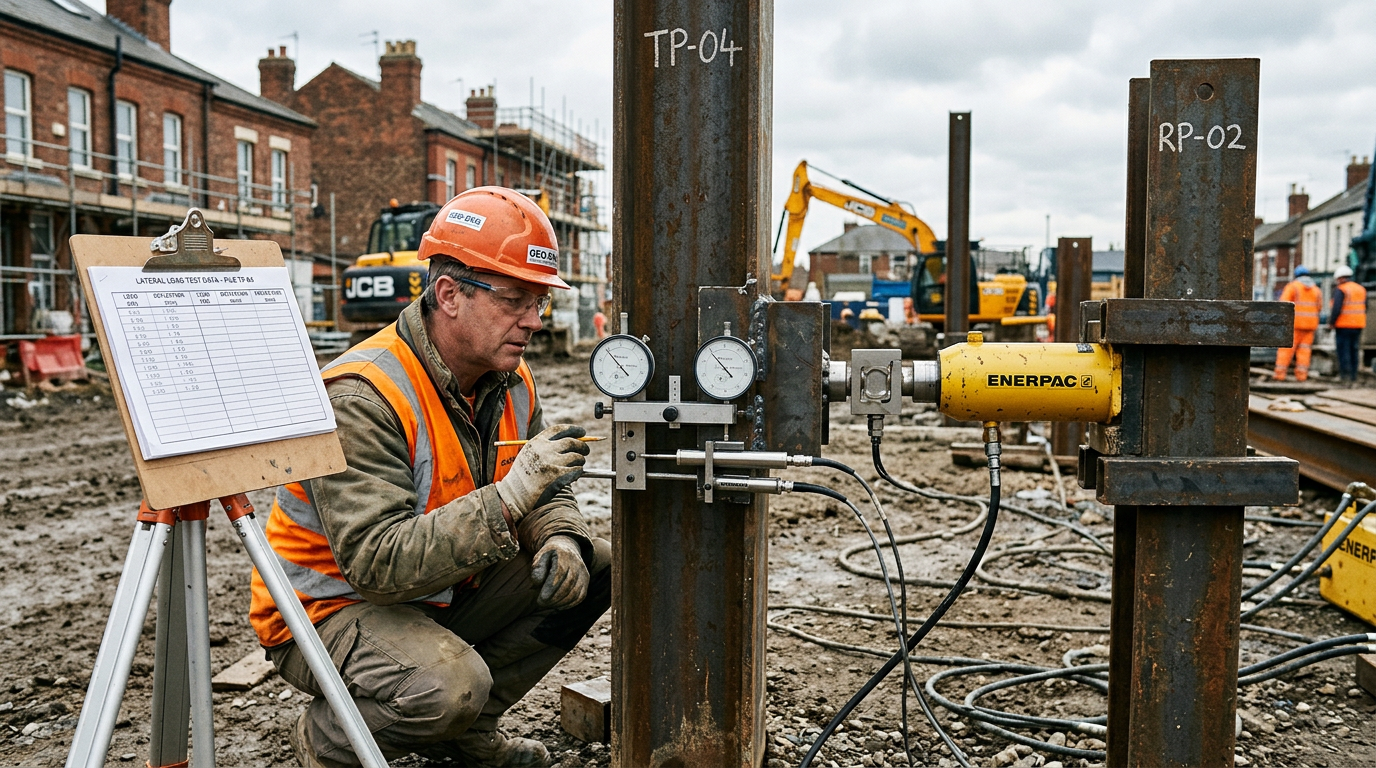
Lateral pile analysis and p–y curves explained
Why the pile on your tallest crane pad, sound wall or bridge pier fails in bending long before it fails in axial compression. A technical primer on lateral pile analysis using p–y curves — the method every civil engineer should understand before specifying a pile.
Read article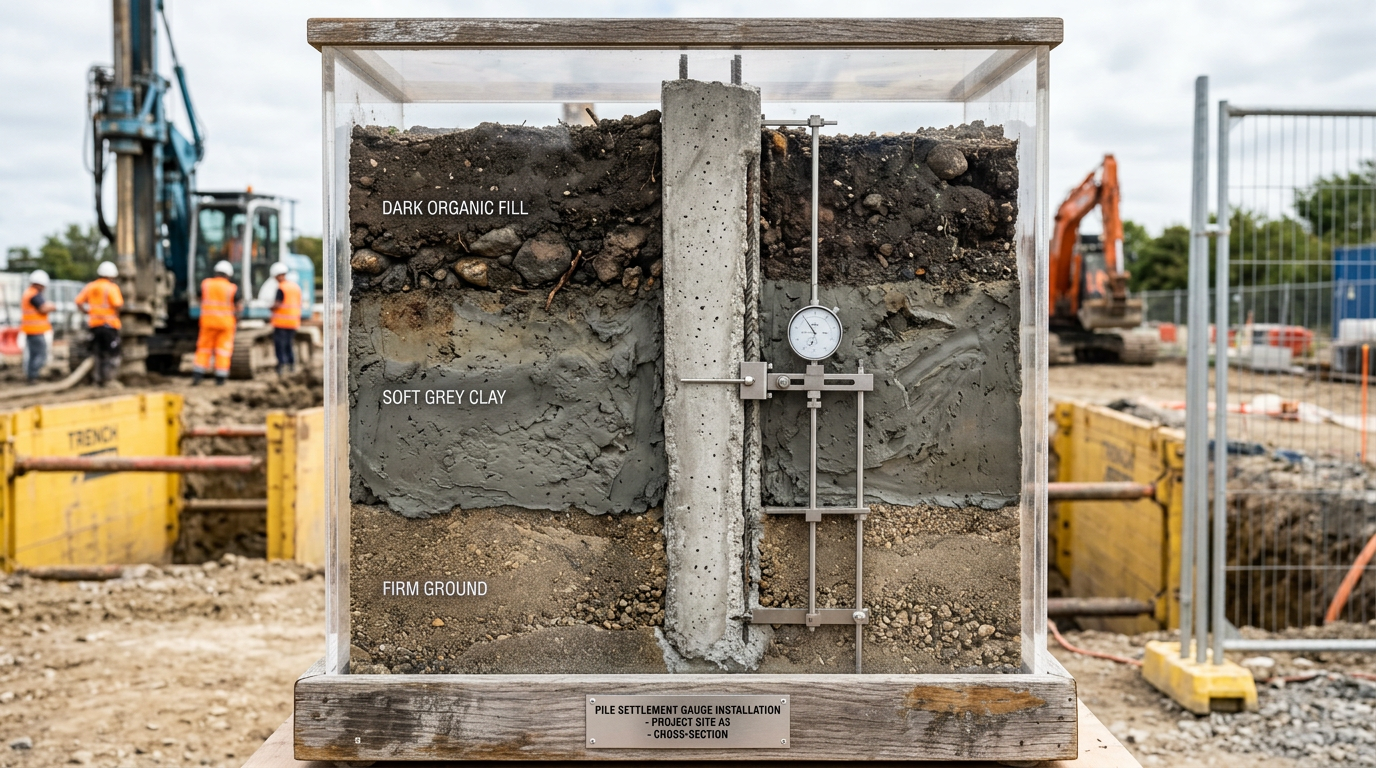
Negative skin friction and downdrag — how to design for it
When the soil pulls the pile down instead of the pile holding the soil up. A clear explanation of negative skin friction, where it happens on Victorian sites, how it reduces effective pile capacity, and how to detail piles to resist or isolate the downdrag load.
Read article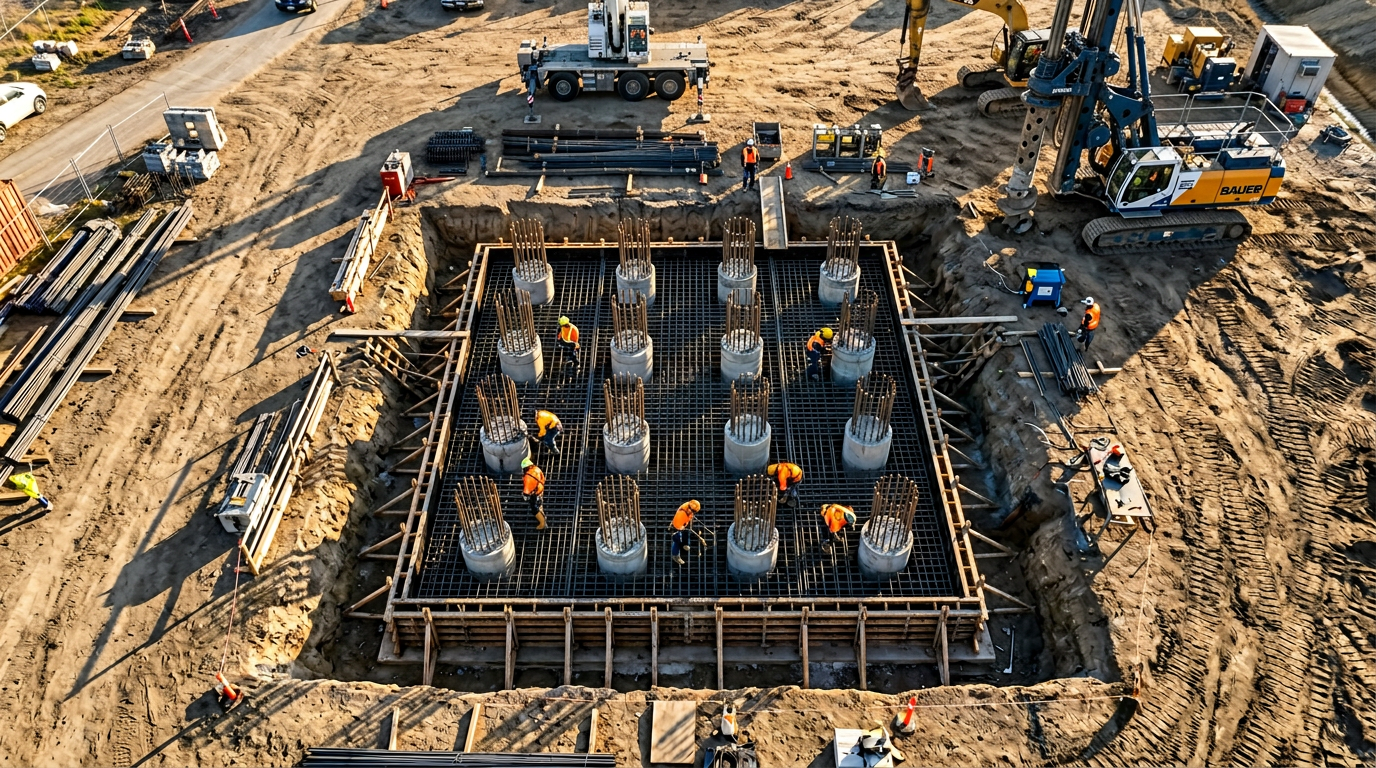
Pile group efficiency — when groups behave worse than single piles
A 12-pile group does not carry 12 times the load of a single pile. An engineering primer on pile group efficiency — shadowing, stress-field overlap, block failure and group settlement — for practising designers and senior engineering students.
Read article CFA piling — method, quality assurance and when to specify it
A practitioner's guide to Continuous Flight Auger (CFA) piling: how the method works, where it beats bored piers, the quality-control instrumentation every spec should demand, and the ground conditions where CFA should be avoided. Written for designers specifying foundations in Victoria.
Read article Secant, contiguous or tangent pile walls — a basement-retention decision tree
Three pile-wall systems look similar on a plan but behave very differently on a wet Melbourne basement. This guide walks through the design drivers — water tightness, stiffness, vibration, cost and program — that decide between secant, contiguous and tangent pile walls.
Read article Micropiles for underpinning — a Melbourne practitioner's guide
When a heritage terrace needs to go up another storey, or a Melbourne slab has lost its founding, micropiles are often the only option that fits. A practical guide to sizing, installing and load-testing micropiles for underpinning on Victorian sites.
Read article The Australian piling standards explained: AS 2159, AS 5100 and AS 4678
A principal engineer's tour through the three Australian Standards that govern piling in Victoria — what each one covers, how they interact, and the pitfalls that fail an audit.
Read article Driven precast concrete piles — where they still beat bored and screw
Replacement piling has dominated urban Australia for 20 years, but displacement driven precast piles still win on a surprising number of projects — marine, coastal, deep granular ground, and anywhere high production rates and low cost-per-metre matter more than vibration.
Read article Lateral pile analysis and p–y curves explained
Why the pile on your tallest crane pad, sound wall or bridge pier fails in bending long before it fails in axial compression. A technical primer on lateral pile analysis using p–y curves — the method every civil engineer should understand before specifying a pile.
Read article Negative skin friction and downdrag — how to design for it
When the soil pulls the pile down instead of the pile holding the soil up. A clear explanation of negative skin friction, where it happens on Victorian sites, how it reduces effective pile capacity, and how to detail piles to resist or isolate the downdrag load.
Read article Pile group efficiency — when groups behave worse than single piles
A 12-pile group does not carry 12 times the load of a single pile. An engineering primer on pile group efficiency — shadowing, stress-field overlap, block failure and group settlement — for practising designers and senior engineering students.
Read articleFAQ
Common questions
What size piles can VIC PILING install?
Bored piers from 300 mm up to 2,100 mm diameter and to depths of 40 m. Steel screw piles up to 1,050 mm diameter and 45 m deep. We have the rigs, tooling and rock augers to drill through clay, sand, basalt and granite where the geotech demands it.
What kind of clients do you typically work with?
Tier-1 civil contractors, energy and gas operators, rail and roads infrastructure, commercial developers and specialist builders right across Victoria. Recent work spans pipeline crossings, rail bridge piers, plant footings, basement retention and large commercial slabs.
Are you compliant with AS 2159?
Yes. Every job we install is designed and certified to AS 2159. Installation records are issued the day the rig leaves site, signed by a chartered engineer and packaged ready for handover to your principal contractor or building surveyor.
How quickly can you mobilise on a Victorian project?
We carry our own fleet of heavy and compact rigs out of Keysborough. Most metro Melbourne work can mobilise inside a week of award. Regional work across Geelong, the Surf Coast, Ballarat, Bendigo, Gippsland and the Mornington Peninsula is normal weekly business.
Got a program. Got a soil report. Need it piled.
Email estimating, send the drawings, or pick up the phone. You'll talk to someone who knows what 1,800 mm of socketed bored pier costs — without having to look it up.