
Retention · Melbourne & across Victoria
Retention systems — engineered to hold the ground.
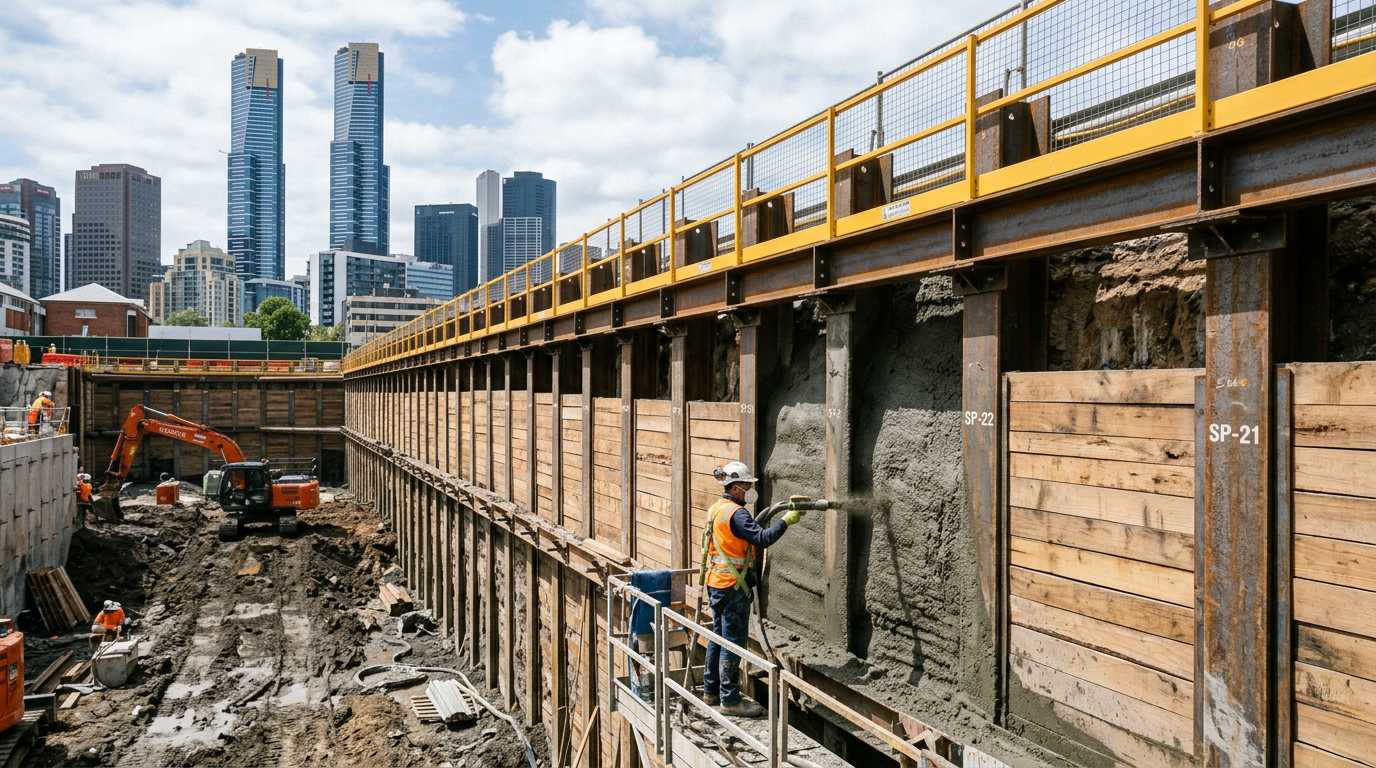
Bored or driven piles arranged along a retaining line, with infill panels, shotcrete or contiguous spacing. Where a slab, basement or road corridor meets a change in ground level, this is the system that keeps the earth on the right side of the line.
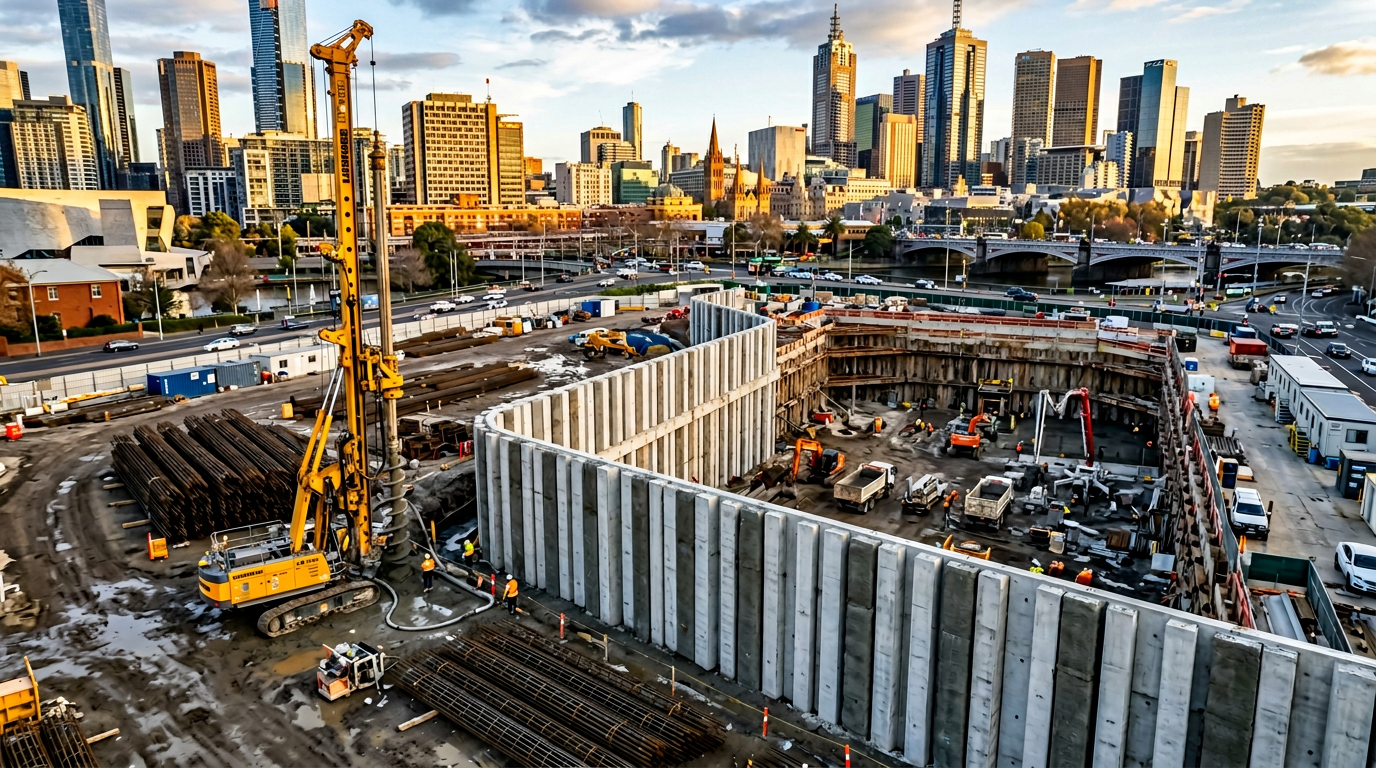
Soldier piles, contiguous bored pile walls, secant walls and capping beams designed and installed for major cut-and-fill, basement retention and corridor works.
- By chartered engineers
- Designed
- Wall heights installed
- 12 m+
- Where required
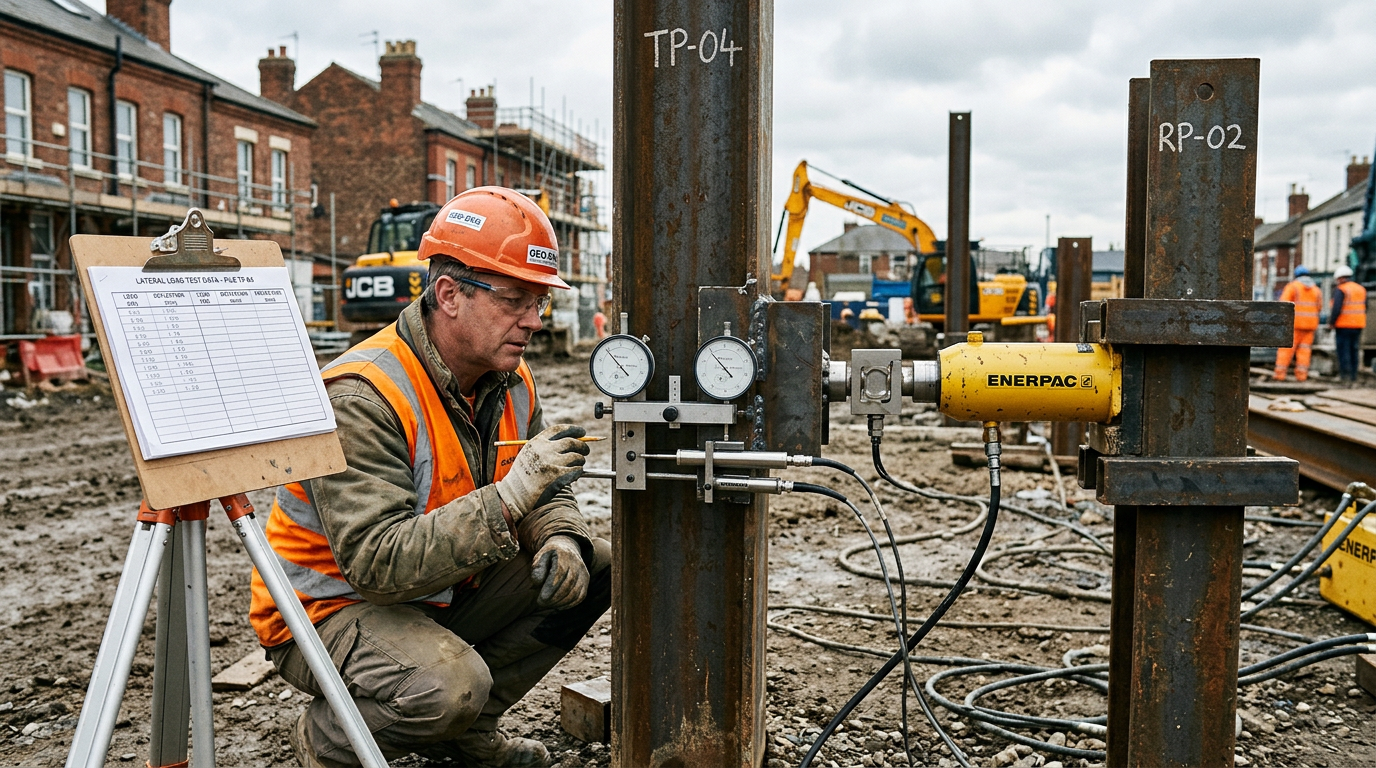
- Load tested
- Pack for handover
- Certified
Why teams choose this system
The short answer to "why retention systems?"
Designed in-house
Pile spacing, embedment and infill detail all engineered to AS 4678 and AS 5100 by our chartered engineers.
Full wall systems
Soldier piles, contiguous, secant, tied-back or propped — we design and install the full system, not just the piles.
Capping beams included
Capping beam, waling and anchor design all handled as part of the package — single-source responsibility.
Permanent or staged
Temporary retention for construction, or permanent architectural walls — both engineered for the full service life.
What it actually is
In plain English.
- Bored or driven piles installed at design spacing along a retaining line.
- Infill of timber, concrete, shotcrete or contiguous pile spacing.
- Tied back, propped or cantilever depending on retained height and loads.
- Capping beams and waling designed and poured in-house.
When to use it
The right pile for the job.
- Major commercial cut-and-fill at property boundaries.
- Basement and car park excavations needing permanent walls.
- Civil works adjacent to roads, rail corridors and watercourses.
- Sloping or unstable ground requiring engineered retention.
Where retention systems wins.
- Basement and car park excavations at property boundaries
- Road and rail cut-and-fill retention adjacent to live corridors
- Sloping or unstable ground requiring engineered retention
- Industrial and infrastructure cut slopes with surcharge loads
We'll tell you if a different system fits better.
- Short, lightly loaded residential boundary walls (timber or block may be cheaper)
- Projects that specifically call for sheet-piled cofferdam works (use Sheet Piling)
Our process
From scope to engineer-signed cert pack.
Pile spacing, depth, embedment and infill detail designed to suit ground, surcharge and adjacent structures.
Bored or driven piles installed at design spacing using the right rig for the access.
Capping beam poured, infill panels, shotcrete or sleepers installed between soldiers.
Engineer sign-off pack issued for principal contractor, surveyor or council.
How fast we can mobilise.
3 – 8 weeks depending on pile diameter, anchor supply and wall height.
How we price it.
Priced per metre of wall, with separates for anchors, shotcrete and capping beam. Quote-back within 72 h of receiving the geotech.
Related projects
Recent work using this method.
Technical reading
Engineer-level detail on this system.
Peer-reviewed articles from our engineering team — diagrams, worked examples and standards references.
FAQ
Questions on retention systems.
How deep do retention piers need to go?
Typically 1.5 to 2 times the retained height, but it depends entirely on ground conditions, surcharge and whether the wall is propped or tied back. Our engineers run the calculation per site to AS 4678.
Can you do contiguous or secant walls?
Yes. Both are standard for our basement and infrastructure clients — design, install and capping beam handled in-house.
When do you recommend anchors versus props?
Anchors where the wall needs a clear excavation face and the back-of-wall zone is clear for drilling. Props where anchoring isn't available or the wall is short and close-propped from the slab.