Bored piling · Melbourne & across Victoria
Bored piling — concrete piers, engineered to the basalt.
Heavy concrete piers drilled into the ground, reinforced and poured in place. The workhorse of civil and commercial piling. When loads are high, or the geotech calls for rock socket, this is the system.
Drilled, reinforced and poured concrete piers for major civil, energy, rail and commercial projects. Rock-socketed where the geotech demands it. Issued with full pour records and chartered-engineer certification to AS 2159 and AS 5100.
- Diameter range
- 300 – 2,100 mm
- Depth capability
- Up to 40 m
- Drilling tooling
- Rock & granite
- Compliant every job
- AS 2159
Why teams choose this system
The short answer to "why bored piling?"
Huge load capacity
Compression, uplift and lateral loads that screw piles and shallow footings can't touch — bridge piers, multi-storey columns, process plant.
Rock-socket capable
We carry rock augers and core barrels for Melbourne basalt, sandstone and granite — socketed piers designed to AS 2159 and AS 5100.
Full documentation
Pour record, cage drop sheet, founding log and chartered-engineer certification on every pier — same day pack.
Design flexibility
Diameter 300 – 2,100 mm, depths to 40 m, variable reinforcement, CSL tubes on request — designed around the geotech, not the rig.
What it actually is
In plain English.
- A cylindrical hole is drilled into the ground to the depth the engineer specifies.
- A steel reinforcement cage, fabricated to the structural design, is lowered into the hole.
- Concrete is placed by tremie, pumped or free-fall, depending on the depth and groundwater.
- The result is a cast-in-place reinforced concrete pier — structurally the same as a column, but under the ground.
When to use it
The right pile for the job.
- Major civil works — bridge piers, abutments, viaducts, rail platforms.
- Energy and process plant footings on rock-founded ground.
- Multi-storey commercial and basement buildings with heavy column loads.
- Pipeline supports and infrastructure crossings.
- Any job where the engineer specifies bored cast-in-place piers, especially socketed.
Where bored piling wins.
- Bridge piers, abutments and road-infrastructure structures
- Multi-storey commercial, retail and healthcare buildings
- Energy and process plant footings on rock-founded ground
- Heritage retention and party-wall piling where lateral load matters
- Any project where an engineer specifies cast-in-place reinforced concrete piers
We'll tell you if a different system fits better.
- Sites with tight access where only a compact screw-pile rig can reach
- Saturated or contaminated ground where concrete integrity is at risk without casing (use sleeve piling)
- Fast-track projects where curing time would delay the slab (consider screw piles)
Our process
From scope to engineer-signed cert pack.
Engineer's drawing, geotech report and load schedule on our desk before pricing. We flag programmability issues at the quote stage, not on site.
Heavy rotary or augering rig matched to diameter, depth and ground. Casing and rock augers travel to site as required.
Hole drilled to design depth. Toe cleaned, founding stratum verified by our geotech and logged per pier.
Cage lowered, concrete placed via tremie or free-fall to spec. Slump and integrity recorded on every pour.
Pour records, cage drop sheets, founding logs and chartered-engineer certification packaged for handover — AS 2159 clause 8 compliant.
Capability
Quick-reference specs.
| Diameter range | 300 mm – 2,100 mm |
|---|---|
| Depth capability | Up to 40 m |
| Founding strata | Clay, sand, basalt, sandstone, granite |
| Rock socketing | Yes — rock augers and core barrels in fleet |
| Reinforcement | Pre-fabricated cages, telescopic for deep piers |
| Concrete placement | Free-fall, tremie or pumped |
| Integrity testing | CSL tubes & PIT testing on request |
| Standards | AS 2159, AS 5100.3, AS 3600 |
How fast we can mobilise.
Typically 2 – 4 weeks from sign-off to install — priority mobilisation available.
How we price it.
Priced per lineal metre drilled and per cubic metre of concrete, with fixed mobilisation. Quote-back within 24 h of receiving the geotech.
Related projects
Recent work using this method.
New government school — STEM building foundations
Bridge approach, rock-socketed bored piers
Hyperscale data-centre foundations — western Melbourne
Technical reading
Engineer-level detail on this system.
Peer-reviewed articles from our engineering team — diagrams, worked examples and standards references.
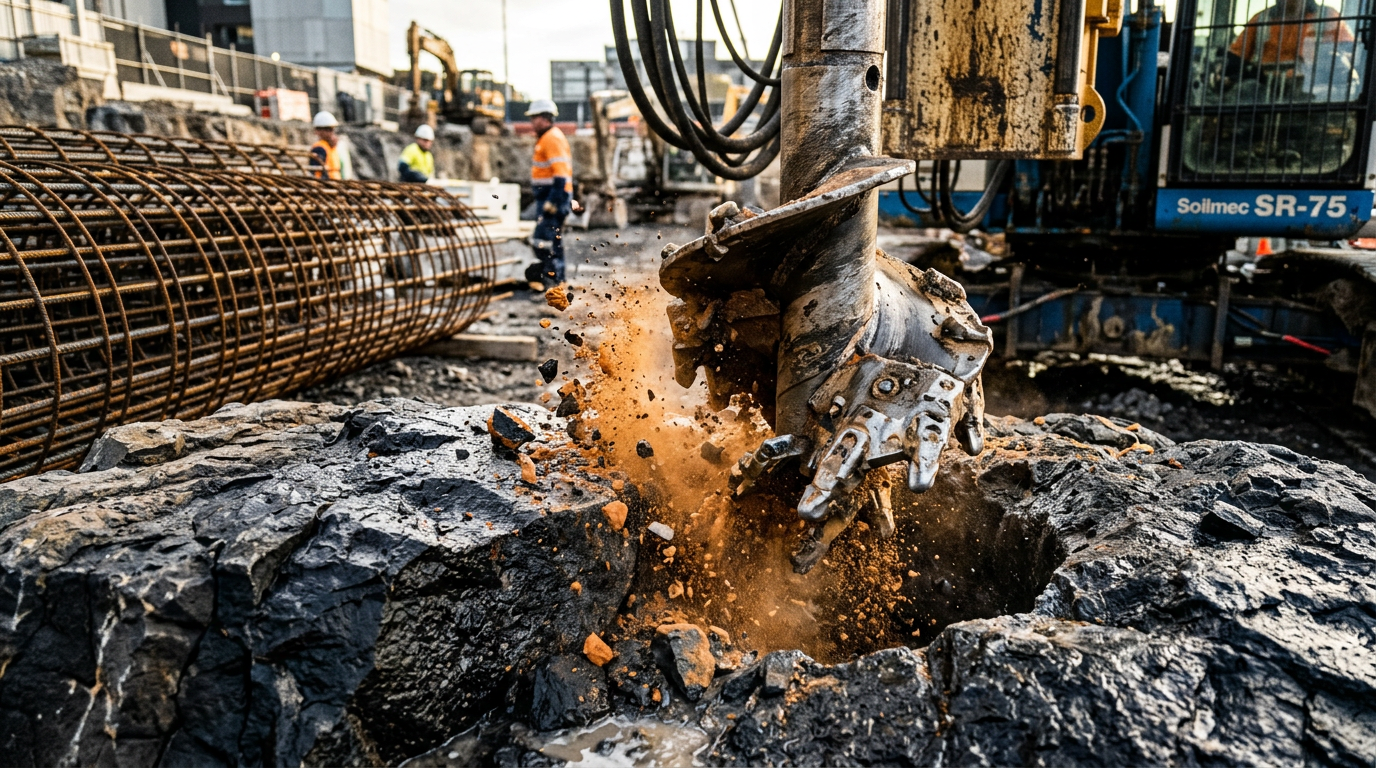
Rock socketing in Victorian basalt and granite: a field guide
Read article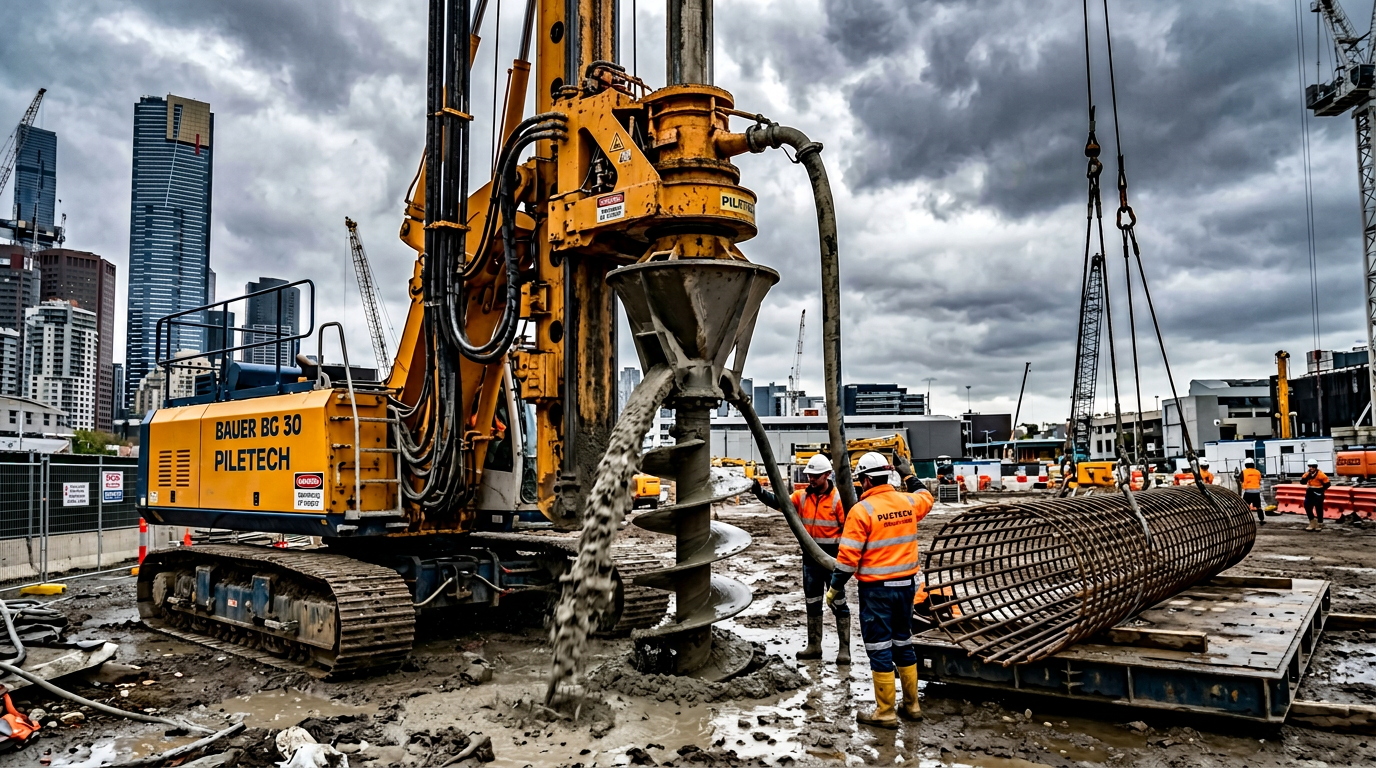
CFA piling — method, quality assurance and when to specify it
Read article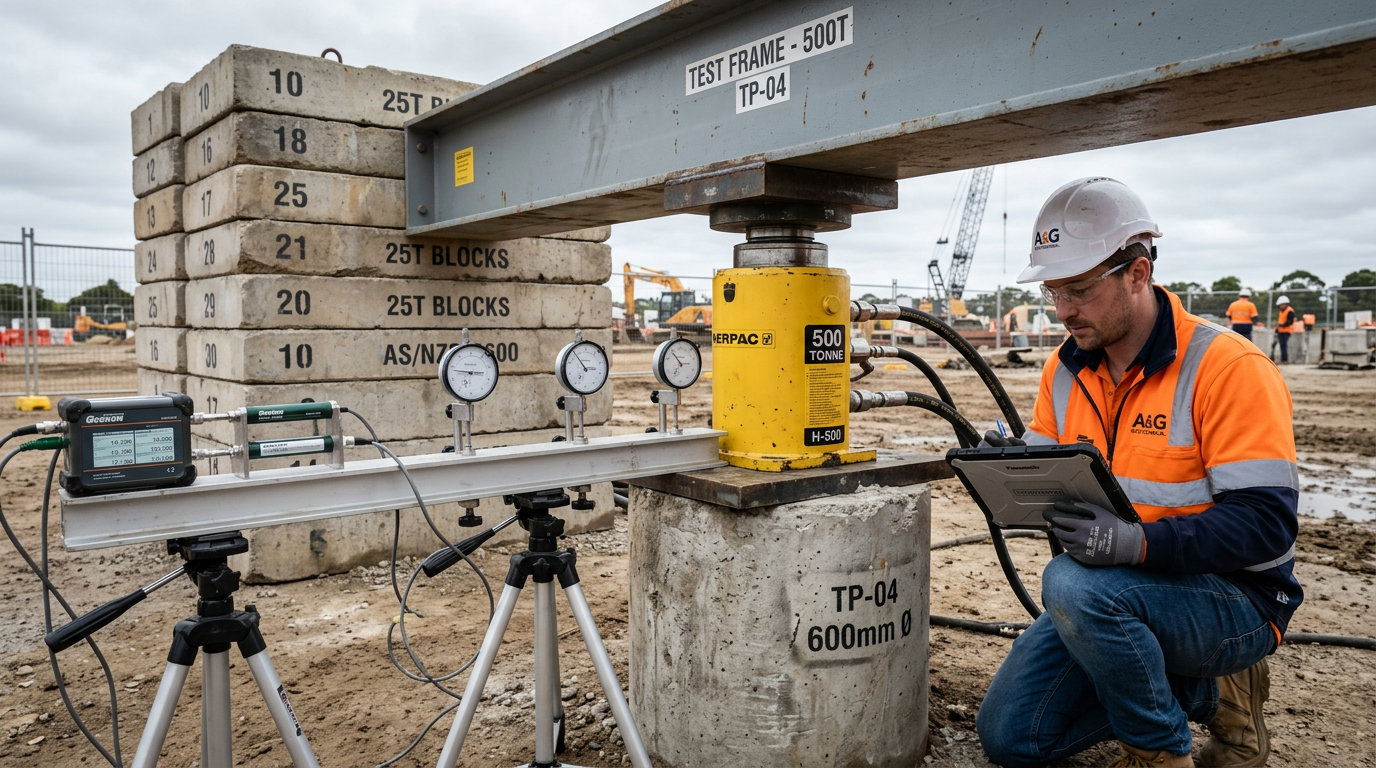
Pile load testing explained: static, dynamic, Osterberg and bi-directional
Read article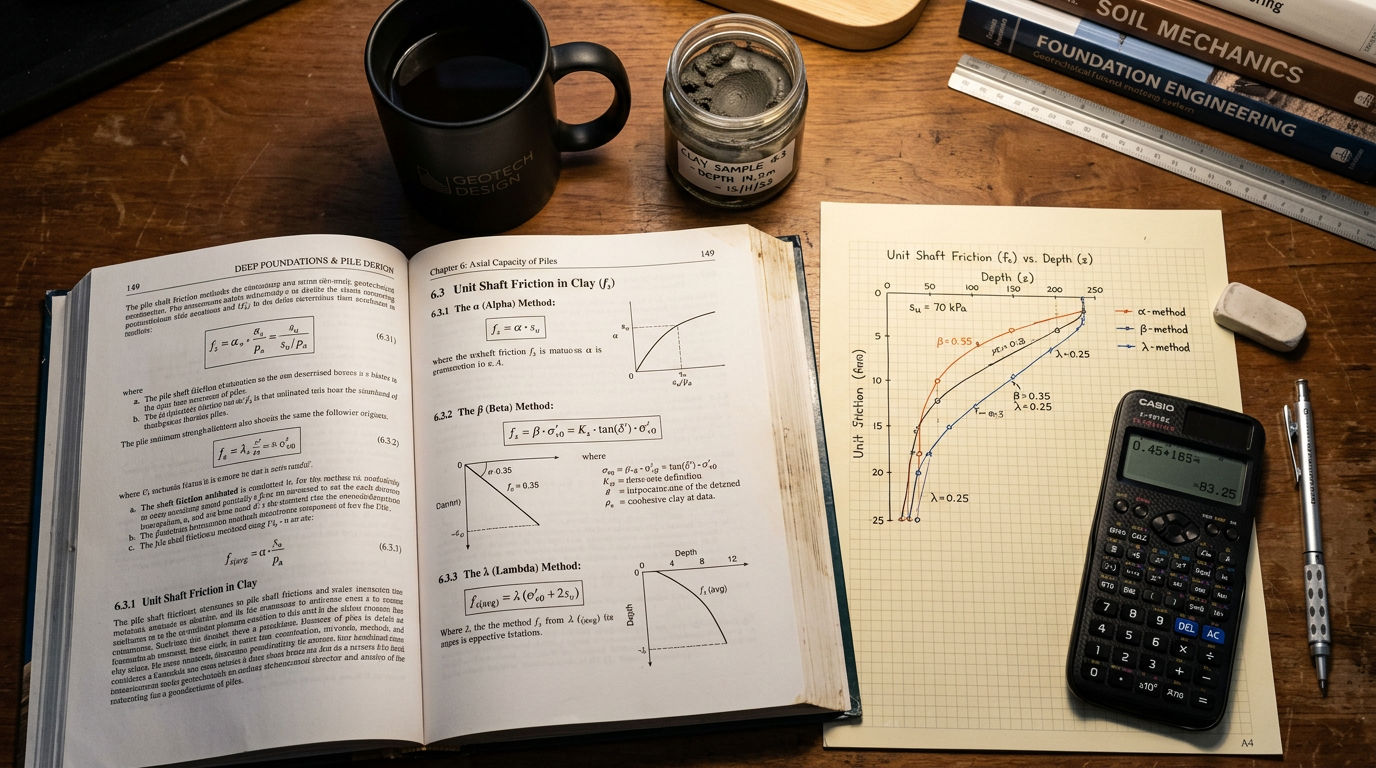
The α, β and λ methods for pile shaft friction — a student-grade primer
Read articleFAQ
Questions on bored piling.
What's the largest diameter you can install?
We routinely install piers up to 2,100 mm diameter. Anything beyond that is on a project-specific basis — give us a call and we'll scope it.
Can you socket bored piers into rock or granite?
Yes. We carry rock augers and core barrels in the fleet and have socketed piers into Melbourne basalt, sandstone and granite across Victoria to depths specified by the geotech.
Do you handle the cage fabrication?
Yes — cages are fabricated to your engineer's design and delivered to site ready to drop. For deep piers we run telescopic cages with mechanical splices to AS 3600.
What documentation comes with the pour?
Pour record per pier (volume, slump, time), cage drop sheet, founding stratum log signed by our geotech, and a chartered-engineer certification covering the lot — issued the day after final pour.
How noisy and messy is bored piling?
Noisier and wetter than screw piling, with spoil to manage, but far less vibration than driven piles. Where vibration or noise is critical, we can run silent equipment and contain spoil in skips.
Can you work close to boundaries and existing structures?
Yes — bored piers are a standard choice for basement retention next to party walls precisely because they're low-vibration. We'll design the rig footprint around the constraint.