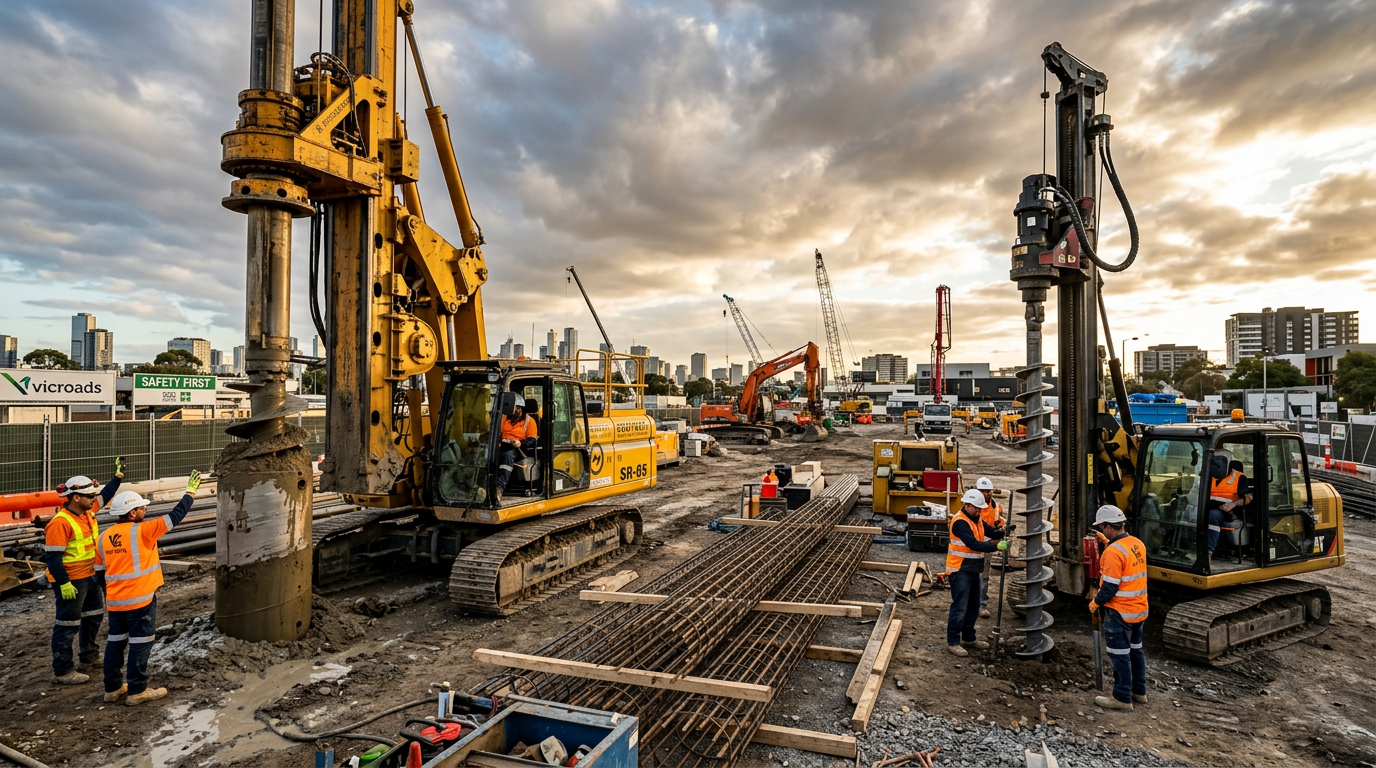
On a residential slab the choice between a bored pier and a steel screw pile is usually a cost conversation. On a tier-1 civil or energy project it’s an engineering one — load path, ground conditions, program and lifecycle drive the answer in very different directions.
Here’s the framework we use when a consulting engineer asks us which system to specify.
Go bored when…
- Loads are heavy. Above ~3,500 kN working compression, bored piers with cast-in-place concrete and full reinforcement are usually the right answer. Our heavy rotary rigs install up to 2,100 mm diameter piers, 40 m deep — well into the capacity range that carries bridge piers and process platforms.
- Rock socketing is specified. Where the design demands socketing into competent rock — basalt, granite or strong mudstone — a rotary bored pier with a rock auger is the only sensible option. Screw piles don’t socket.
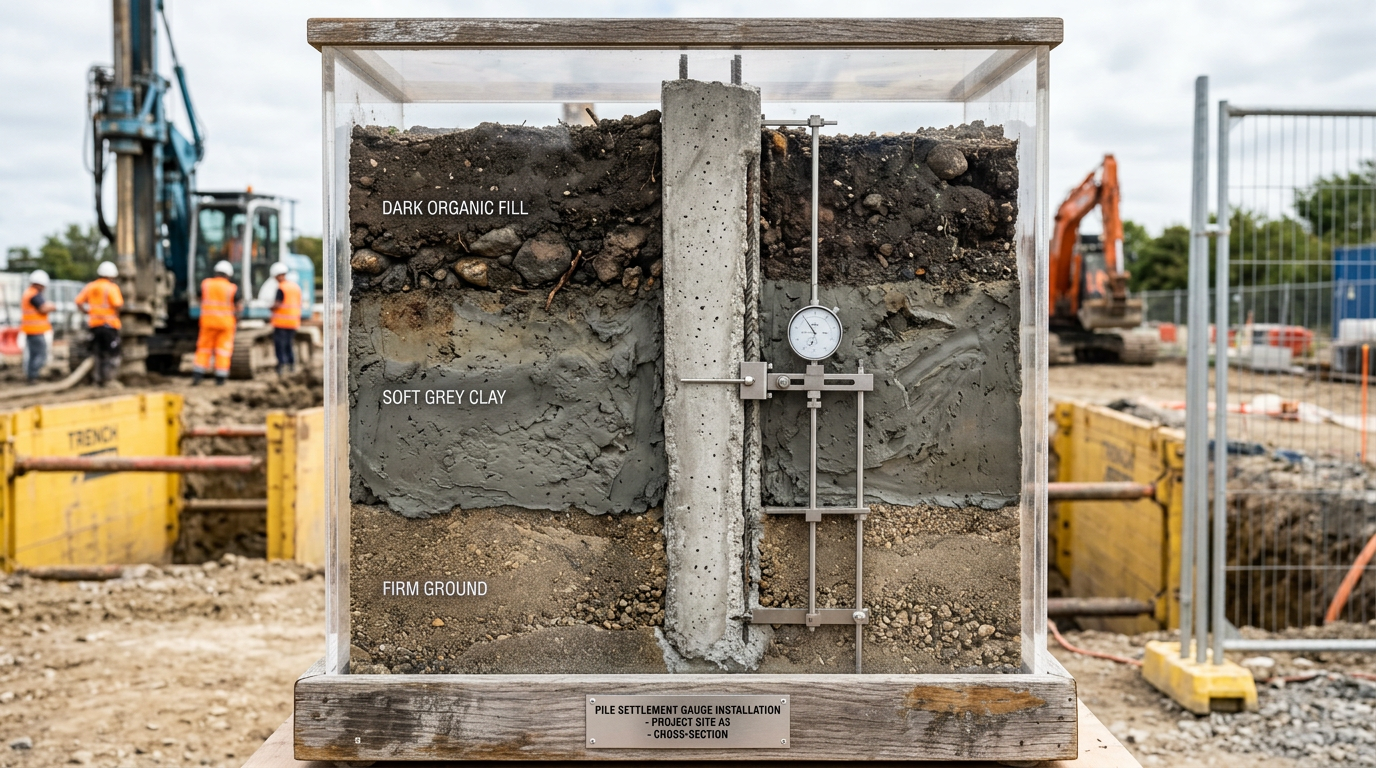
- Ground is cohesive and stable. Firm-to-stiff clay with controlled groundwater is textbook bored pier ground. Sleeve only where collapse risk exists.
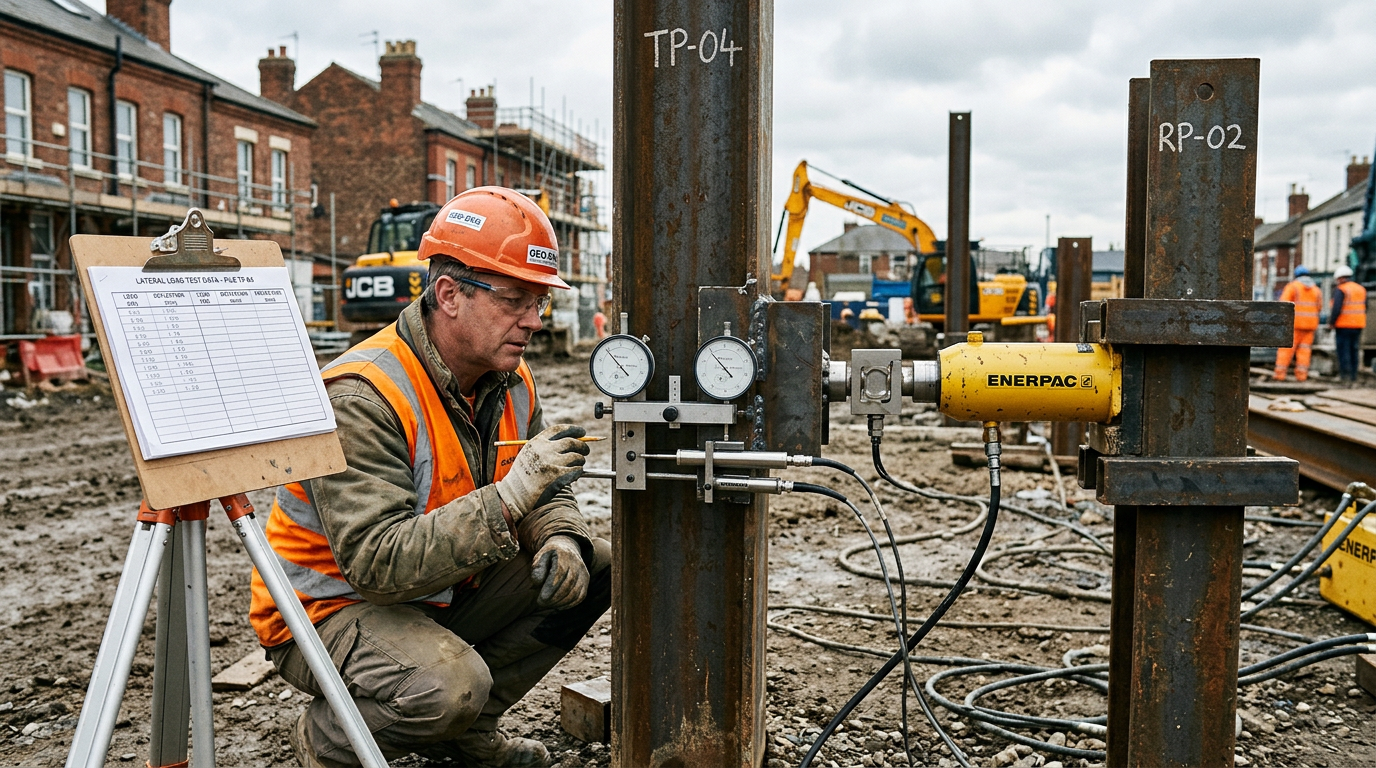
- Permanent lateral load is significant. Large-diameter reinforced bored piers carry lateral load elegantly; steel screw piles need bracing or laterals to match.
Go screw-pile when…
- Ground is variable, sandy or saturated. Steel screw piles up to 1,050 mm diameter and 45 m deep work brilliantly in reactive clays, sandy fills and tidal ground where a bored pier would fight water every inch.
- Spoil is a problem. Contaminated sites, live plant areas, ecologically sensitive foreshore — screw piling produces effectively zero spoil.
- Program is tight. No concrete, no curing. Load the structure the same day the pile is installed.
- Tension or cyclic load dominates. Helical plates carry tension capacity that mass concrete piers can’t match efficiently.
- Future decommissioning matters. Screw piles can be extracted; bored piers are permanent.
Sleeve piling — the hybrid case
When the upper 3-8 m of ground is collapsing sand or saturated fill but the founding stratum below is competent, sleeved bored piling is the right answer. The permanent steel casing isolates the collapsing zone while a clean bored pier is formed in the competent ground below. Pipeline crossings, marine approaches and reclaimed industrial sites are classic use cases.
The honest answer
No good piling contractor pushes one system over another. We install all six systems — bored, screw, sleeve, sheet, retention and engineered — because different ground, different loads and different programs need different answers. Send the geotech and the loadings and we’ll tell you what we’d specify if we were signing the drawings.
References
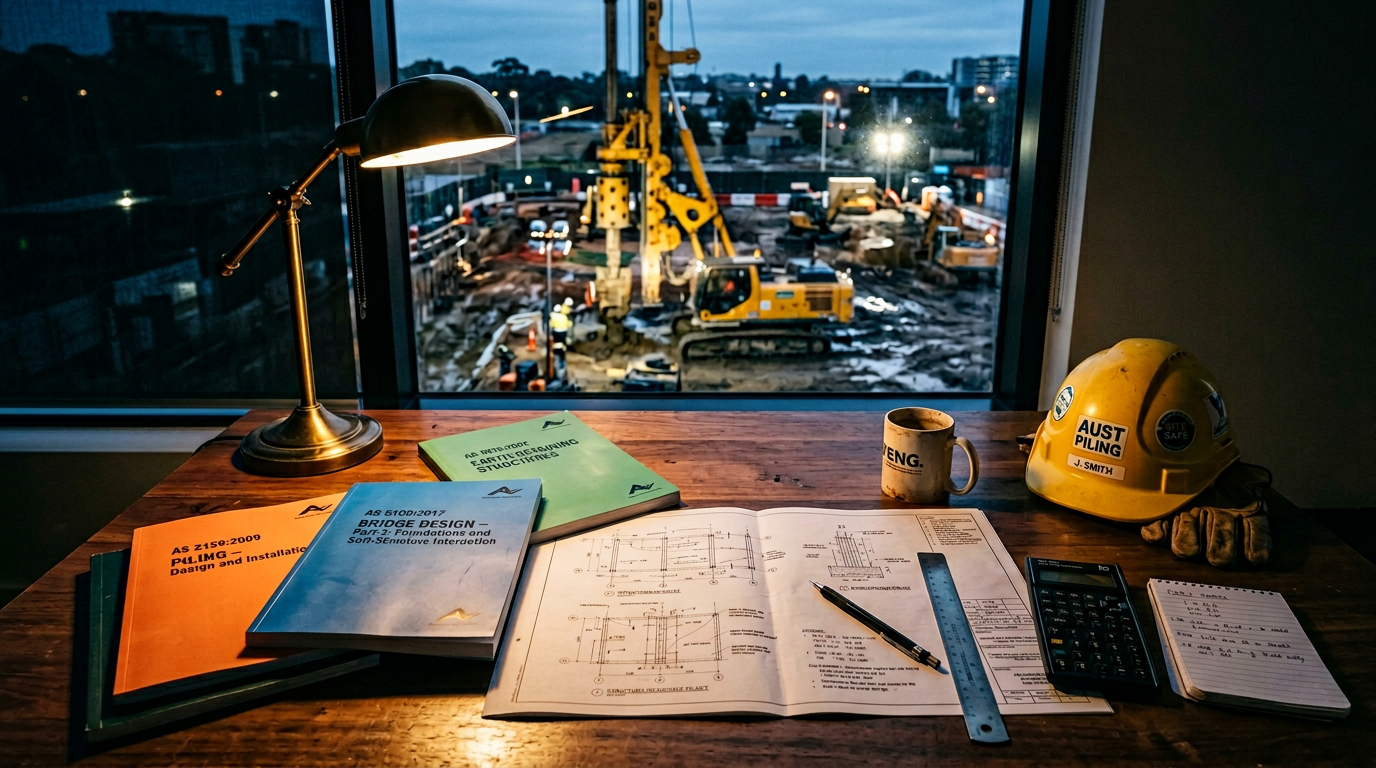
- Standards Australia, AS 2159:2009 — Piling: Design and Installation (reconfirmed 2018).
- Tomlinson, M. J. & Woodward, J., Pile Design and Construction Practice, 6th ed., CRC Press, 2015.
- Perko, H. A., Helical Piles: A Practical Guide to Design and Installation, Wiley, 2009.
- Fleming, K., Weltman, A., Randolph, M. & Elson, K., Piling Engineering, 3rd ed., Taylor & Francis, 2009.
Article technically reviewed by a chartered civil/geotechnical engineer (CPEng, MIEAust).
VIC PILING is a specialist piling contractor delivering tier-1 civil, energy, rail and commercial foundations across Victoria since 2016. Our principals bring 30+ years of combined design, installation and compliance experience under AS 2159, AS 5100 and AS 4678.