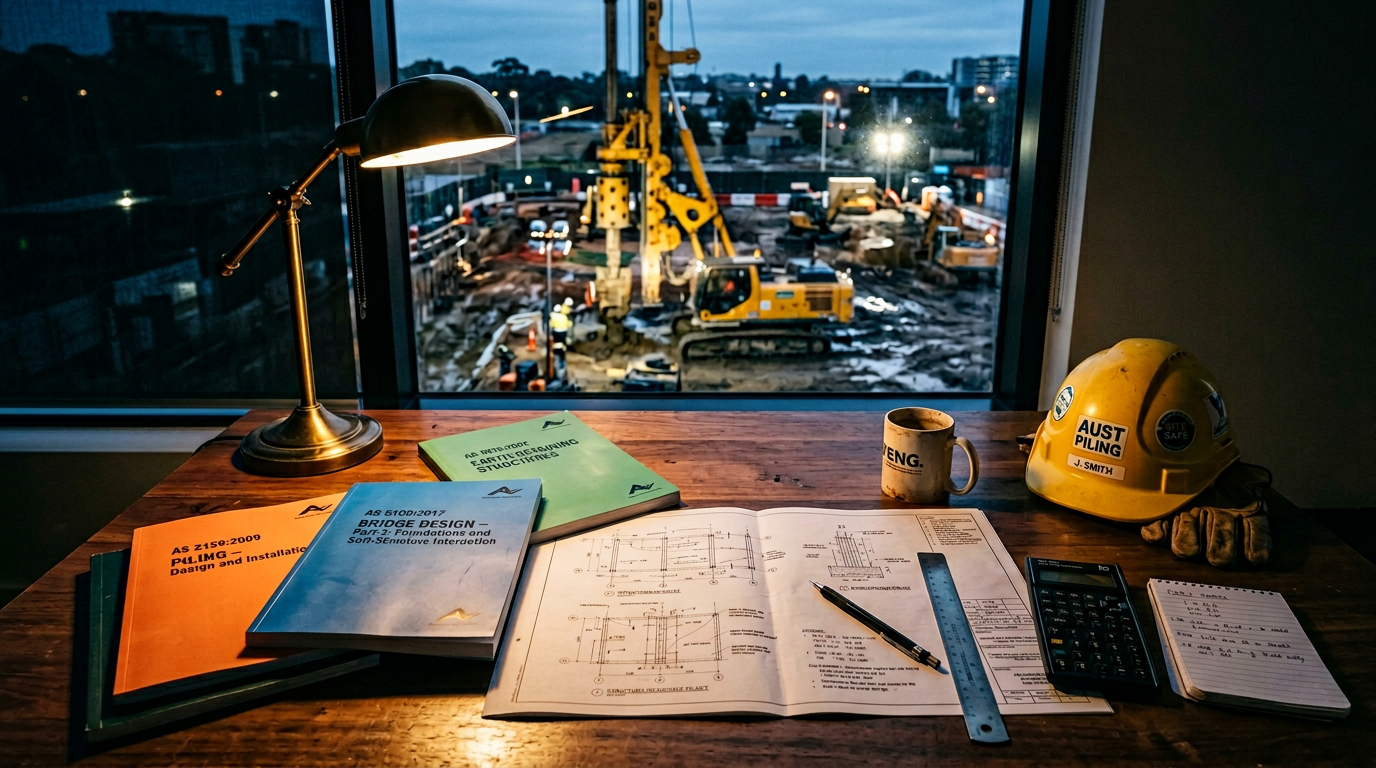
AS 2159:2009 is the Australian Standard for piling design and installation. On a tier-1 civil, energy or rail project, “installed to AS 2159” is a phrase the lead engineer hears every day — and trusts only when the paperwork is right.
Here’s what that paperwork actually looks like.
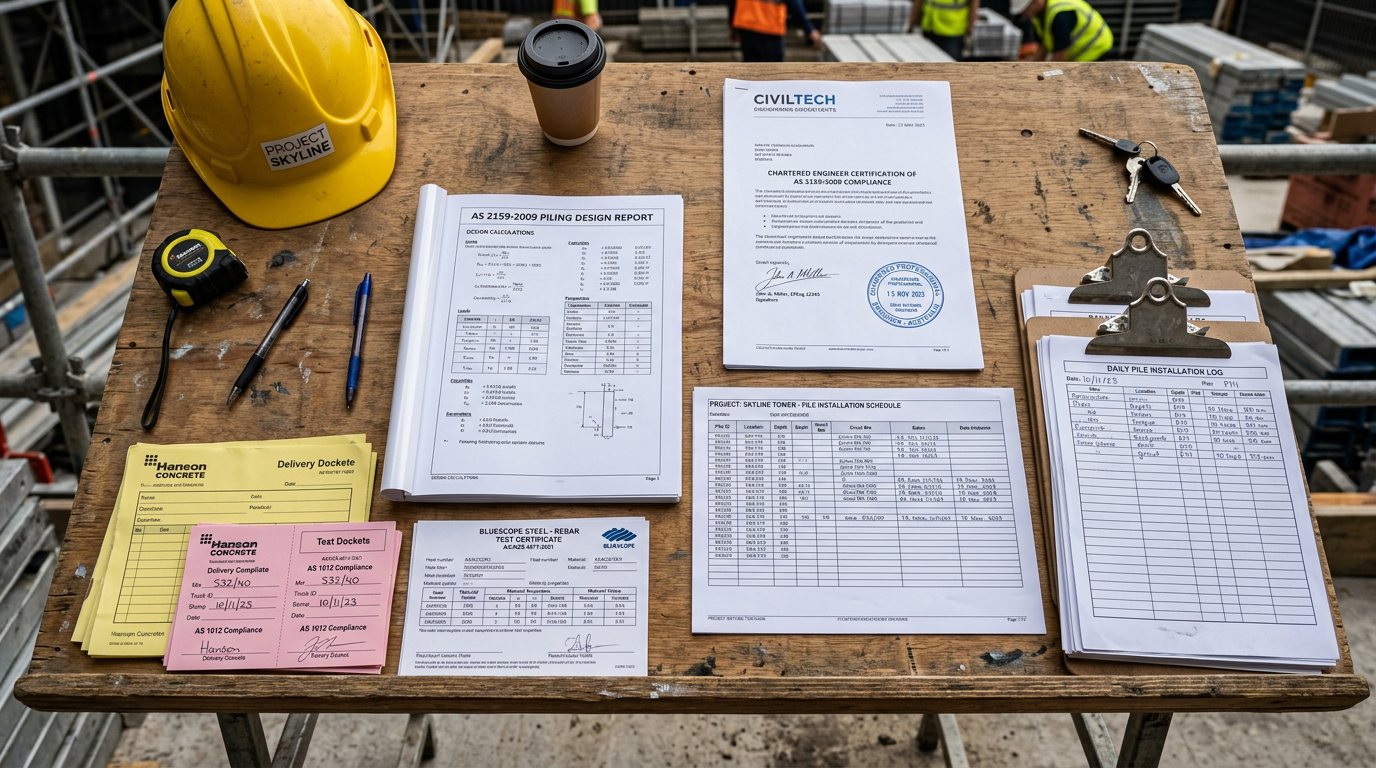
1. Design report & capacity calculations
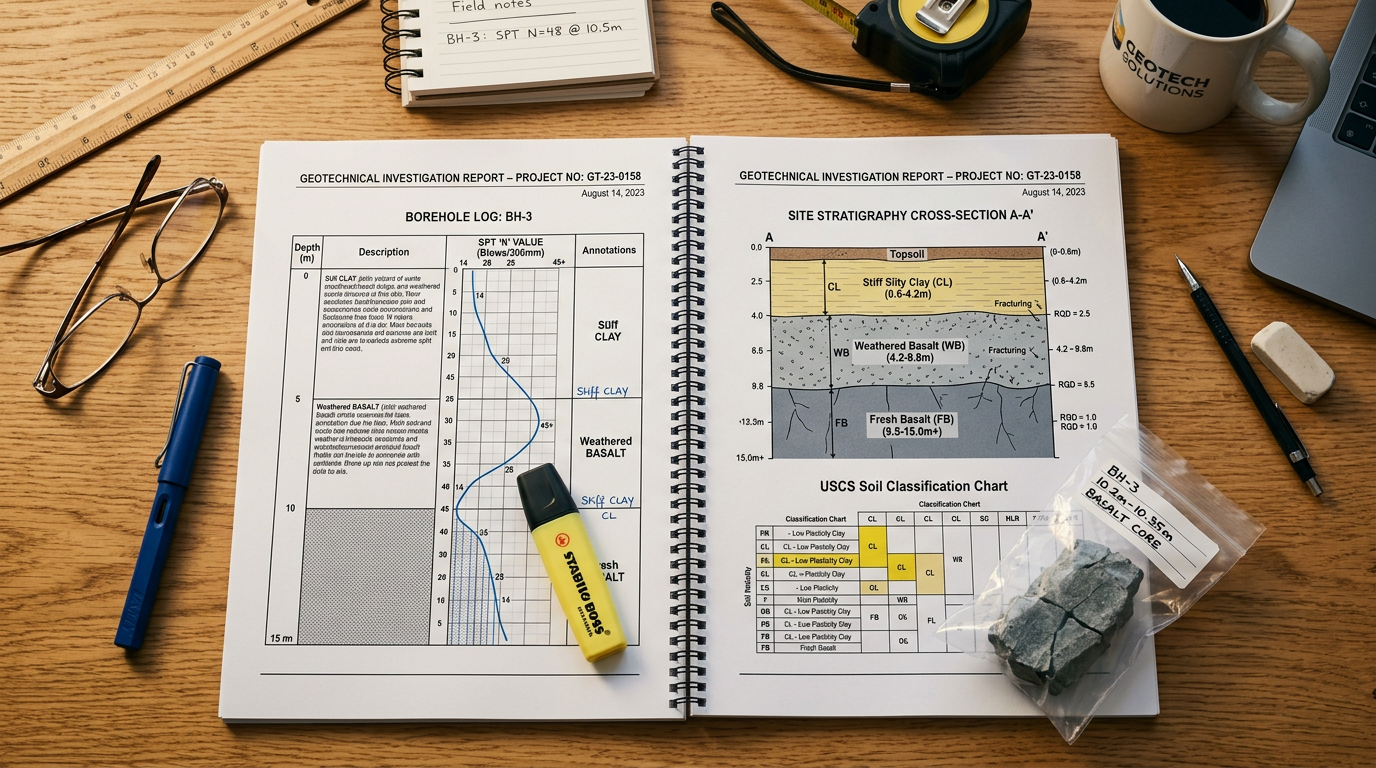
The design report demonstrates capacity under AS 2159 Section 4-6 framework. That means Φg — the geotechnical strength reduction factor — has been argued explicitly from the site investigation, not guessed from a default table. Sensitivity to depth, diameter and founding capacity should all be visible.
2. Pile schedule
Every pile on its own row — location, diameter, design depth, capacity, acceptance criteria and founding stratum. This becomes the baseline the installation records are compared against.
3. As-installed records
Per-pile, per-pour, per-drive records — depth achieved, torque logged, concrete volume placed, cage drop verified, founding-stratum identified. These are what the superintendent signs off against the schedule at close-out.
4. Chartered engineer certification letter
Signed, project-specific, referencing the AS 2159 design and the install records. “We certify that the installed piles achieve the capacity specified in drawing XYZ-001.” That’s the line principal contractors need.
5. Material certification
Mill certs for steel, concrete dockets per pour, galvanising batch records where applicable. Lot-traceable back to install date.
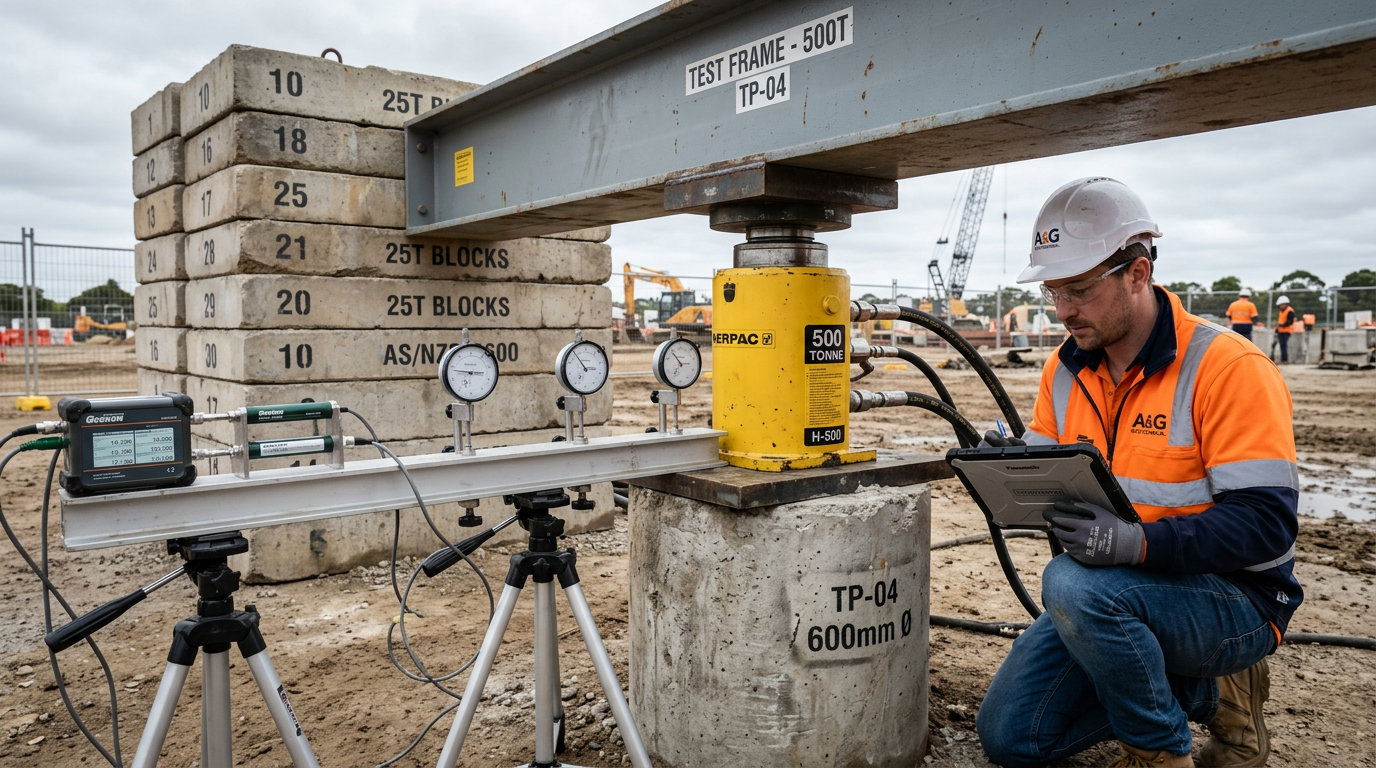
6. Load test reports (where specified)
Static compression, tension, lateral, dynamic (PDA) or maintained-load — carried out via accredited test engineers and fed directly back into the capacity demonstration.
Why it matters in the field
Without all six documents aligned, lot handover gets delayed. We package them together as a single PDF on the day the last pile is installed — which is why we can close out piling subcontracts inside the program window rather than sitting in RFI loops.
If your next project needs a specialist piling subbie who treats the cert pack as part of the deliverable (rather than an afterthought), send us the drawings.
References
- Standards Australia, AS 2159:2009 — Piling: Design and Installation (reconfirmed 2018).
- Standards Australia, AS 3600:2018 — Concrete Structures.
- Standards Australia, AS/NZS 4680:2006 — Hot-dip galvanised (zinc) coatings on fabricated ferrous articles.
- Standards Australia, AS 1289 — Methods of testing soils for engineering purposes (referenced set).
- Institution of Civil Engineers (UK), Specification for Piling and Embedded Retaining Walls (SPERW), 3rd ed., 2016 — cross-referenced international practice.
Article technically reviewed by a chartered civil/geotechnical engineer (CPEng, MIEAust). This article summarises engineering guidance; project-specific advice should be sought from a qualified engineer.
VIC PILING is a specialist piling contractor delivering tier-1 civil, energy, rail and commercial foundations across Victoria since 2016. Our principals bring 30+ years of combined design, installation and compliance experience under AS 2159, AS 5100 and AS 4678.